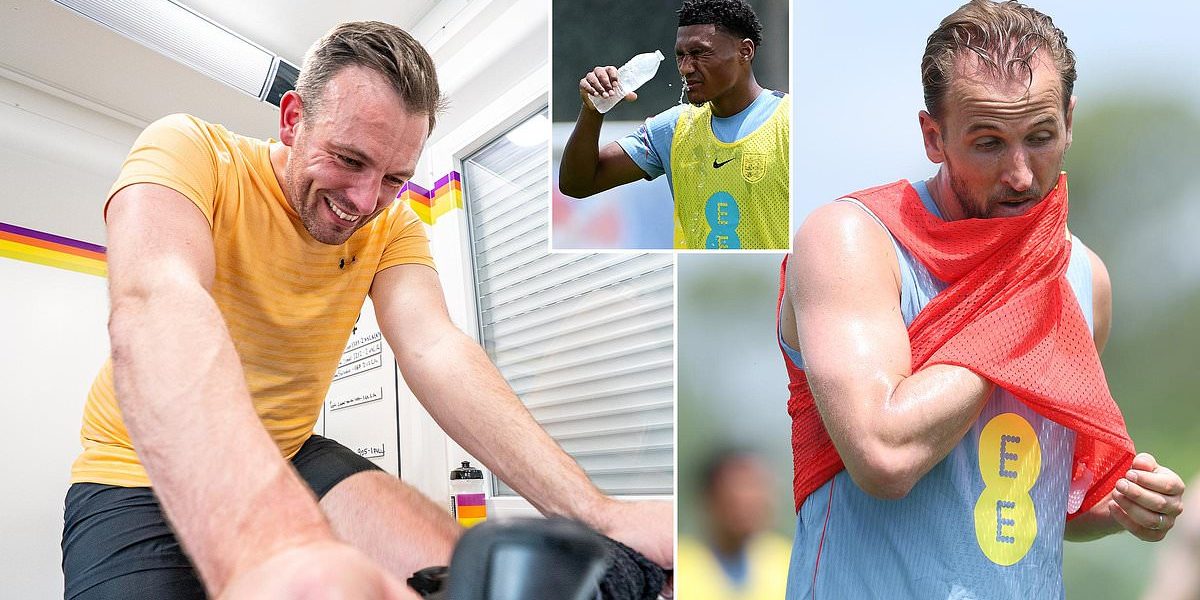
The world’s top footballers are set to face a grueling challenge at this year’s World Cup: temperatures that can soar to 40°C. For some of us, this means a sweltering summer day, but for professionals like England’s World Cup hopefuls, it’s a potentially career-ending test of endurance.
A Scorching Reality Check
During a 50-minute exercise stint, I experienced the reality of playing in such extreme conditions. The average temperature was a sweltering 39.8°C, with humidity levels at 46%. The effects were immediate and debilitating. Rivers of sweat poured from my forehead, and my legs felt like they were weighed down with lead.
Experts have long warned that temperatures above 40°C could be a major obstacle for players, and my personal experiment seemed to confirm their worst fears. I was drenched in sweat, dizzy, and disorientated, and I wasn’t even pushing myself to the limit.
A World Cup of Consequences
The World Cup’s organizers have been criticized for scheduling matches in peak heat, but they argue that it’s a necessary evil. However, the consequences of playing in extreme temperatures could be severe. Players won’t just get tired – they could suffer from dehydration, heatstroke, and even long-term damage to their physical health.
The International Football Association Board has proposed introducing rule changes to protect players from the heat, but it’s unclear whether they’ll be implemented in time for the World Cup.
What This Means
The reality is that many players won’t even last a half in these conditions. What this means for the tournament is uncertain, but one thing is clear: the players who adapt fastest to the heat will have a significant advantage over those who don’t. The World Cup is always a showcase of human endurance, but this year, it could be a matter of survival.