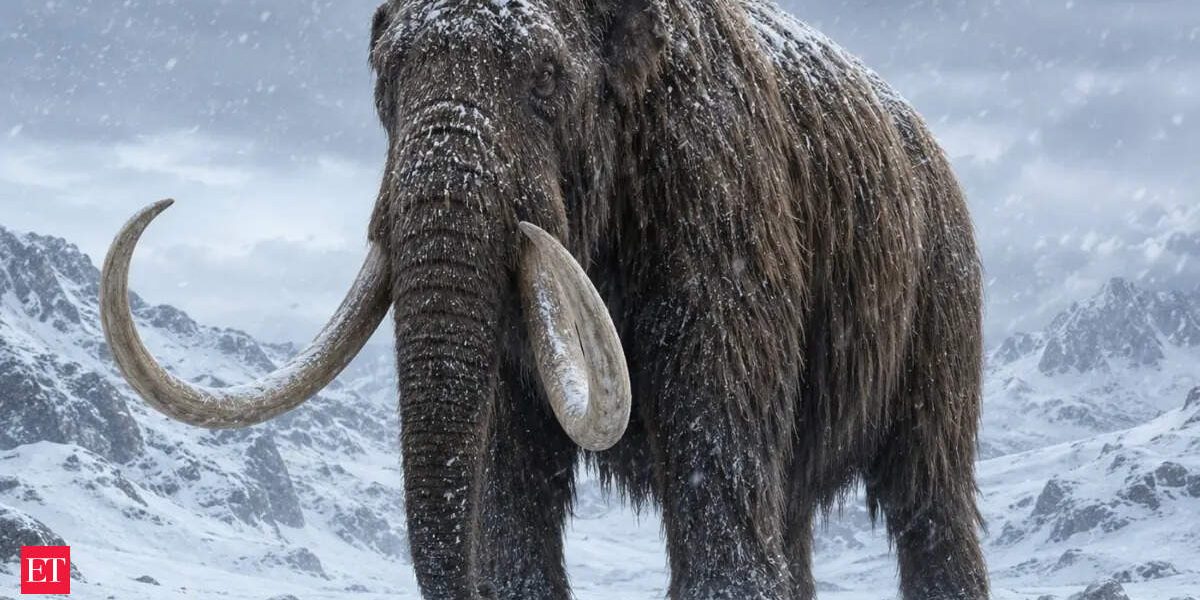
Scientists have stumbled upon an incredible discovery in the frozen tundra of Siberia, where a 52,000-year-old woolly mammoth has yielded fossilized chromosomes, revealing an ancient genome’s three-dimensional structure. This unprecedented find is a major breakthrough in the field of ancient DNA research, challenging the conventional methods used to study the genetic material of long-extinct creatures.
Unraveling the Secrets of Ancient DNA
For decades, researchers have been working with fragmented DNA, extracted from bones, teeth, or preserved samples of ancient organisms. However, this new discovery shows that natural freeze-drying has preserved not only the DNA but also its three-dimensional structure, which is essential for understanding the genetic code of an organism. This means that scientists can now analyze the entire genome, rather than just fragments, providing a more accurate picture of the evolutionary history of the woolly mammoth.
Revolutionizing the Study of Ancient Life
This finding has significant implications for the field of paleogenetics, as it opens up new avenues for studying ancient life. By analyzing the intact genome of the woolly mammoth, researchers can gain insights into its evolution, behavior, and adaptation to its environment. This knowledge can also be applied to other species, potentially revealing new information about the evolution of life on Earth.
What this means
The discovery of fossilized chromosomes in the 52,000-year-old woolly mammoth has significant practical implications. It shows that ancient DNA can be preserved for much longer than previously thought, and that it may be possible to extract intact genomes from even older samples. This has the potential to revolutionize our understanding of ancient life and could lead to new discoveries in the field of paleontology and genetics.
Researchers are already planning to analyze the woolly mammoth’s genome in more detail, hoping to learn more about its evolutionary history and the factors that contributed to its extinction. This research has the potential to not only shed light on the past but also inform our understanding of the present and future of life on Earth.