Edison’s Claim to Voice Recording May Be a Myth
A new study suggests that Thomas Edison may not have been the first to record the human voice, challenging his long-held reputation as the inventor of the phonograph. Researchers claim to have found evidence that a precursor to Edison’s device may have existed a century earlier.
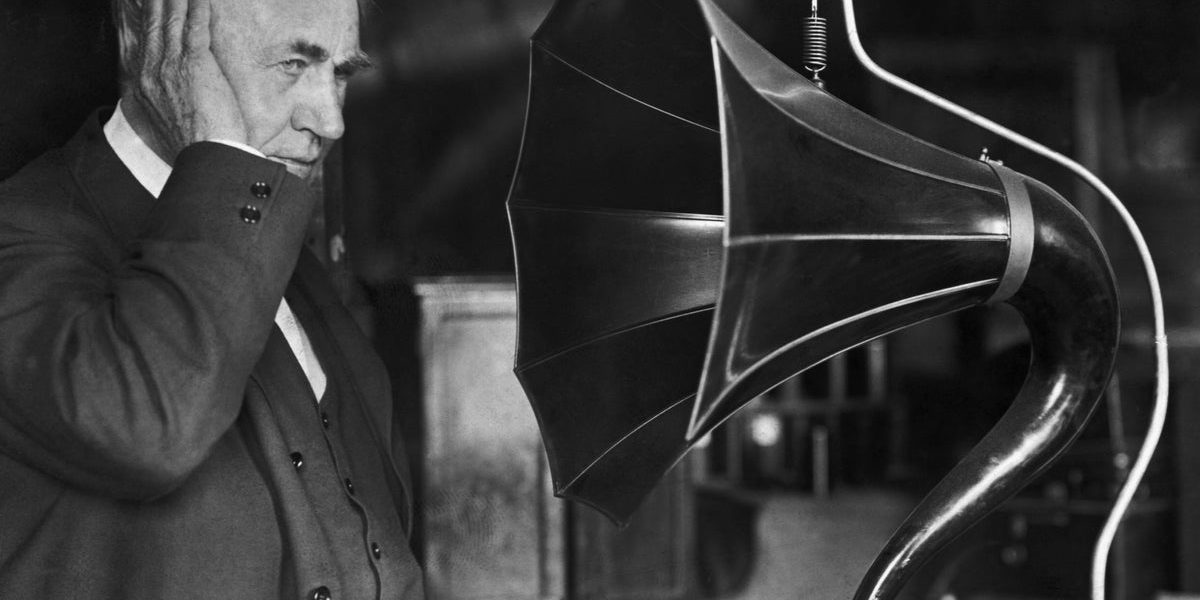
On December 7, 1877, Edison walked into the offices of Scientific American in New York City and placed a metal device on a desk. With a turn of a crank, Edison astonished the dozen or so staff present by capturing and replaying a spoken message. The demonstration is often cited as the moment Edison unveiled the phonograph, a device capable of recording and playing back sound.
However, new evidence points to a different story. Historians have discovered a patent application filed by French inventor Charles Cros in 1877, which describes a device remarkably similar to the phonograph. The application, which was never granted, outlines a machine that uses a cylinder covered in tinfoil to record and play back sound.
A Rival Claim
The discovery of Cros’s patent application raises questions about the true origins of the phonograph. While Edison is often credited with the invention, Cros’s work may have beaten him to the punch. The exact nature of the relationship between the two inventors is unclear, but it’s possible that Edison was inspired by Cros’s ideas.
What this means:
Edison’s claim to fame may be due for a revision. While the inventor’s achievements are undeniable, it’s clear that he wasn’t the first to tackle the challenge of recording sound. The discovery of Cros’s patent application serves as a reminder that innovation often builds upon the work of others, and that the stories behind these discoveries are often more complex than we think.
The Legacy of Thomas Edison
Edison’s legacy extends far beyond the phonograph. He holds over 1,093 patents in his name and is credited with numerous inventions, including the light bulb and the motion picture camera. While the discovery of Cros’s patent application may challenge Edison’s claim to fame in one area, it does nothing to diminish his overall impact on the world of science and technology.
As the story of the phonograph continues to unfold, one thing is clear: the history of innovation is rarely straightforward, and the true pioneers behind groundbreaking discoveries are often shrouded in mystery.