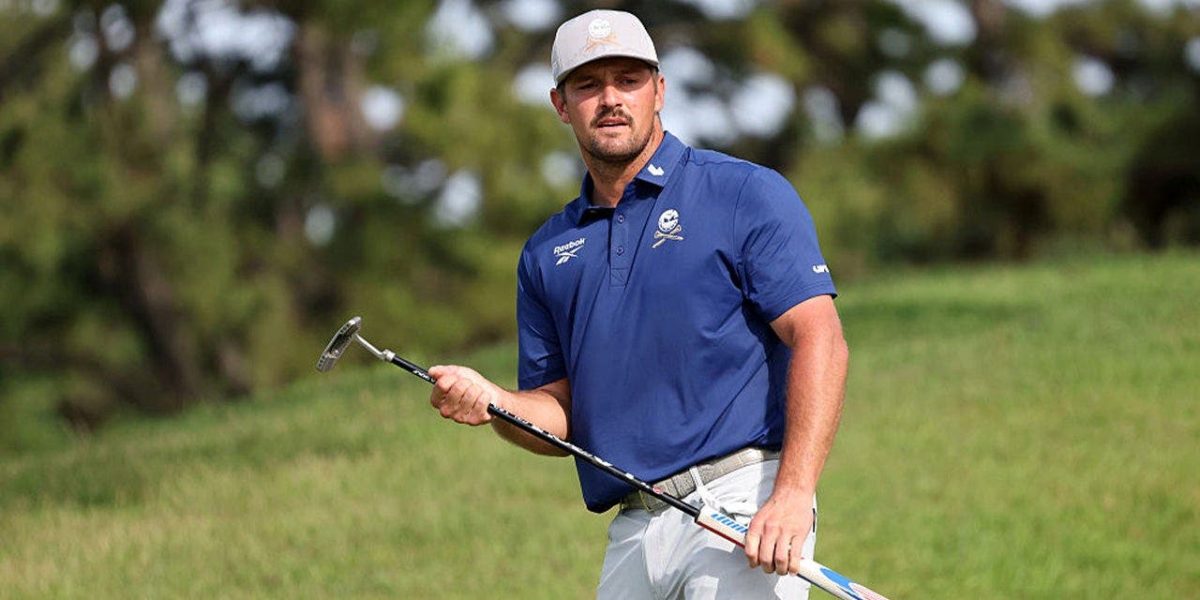
Tiger Woods, a legendary golfer known for his unwavering dedication to honing his craft, might want to take note that Bryson DeChambeau, a fellow professional, has turned to AI for help tweaking his golf swing.
After a disappointing third round, DeChambeau spent hours discussing physics principles with an AI system to address his struggles on the course. The golfer’s reliance on AI is no surprise, as the technology has made significant strides in recent years, particularly in the realm of data analysis and machine learning.
Bryson DeChambeau’s AI Experiment Yields Results
Although DeChambeau’s experiment with AI didn’t yield an immediate victory, his decision to leverage the technology showcases the growing trend of professional athletes seeking AI-assisted training methods. By combining AI’s analytical capabilities with his own expertise, DeChambeau aimed to optimize his swing and ultimately improve his performance on the course.
According to reports, DeChambeau’s AI conversation covered topics such as torque, spin rate, and ball trajectory, all critical factors in golf swing mechanics. By analyzing these factors and adapting his technique accordingly, DeChambeau aimed to fine-tune his swing and regain his competitive edge.
The AI Advantage
The integration of AI in sports training is no longer a novelty, and DeChambeau’s experience serves as a prime example of its potential to enhance athletic performance. AI systems can process vast amounts of data, identifying patterns and correlations that might elude human analysis.
By collaborating with AI, athletes can gain valuable insights into their performance, pinpoint areas for improvement, and develop targeted training strategies. As AI technology continues to advance, we can expect to see more professional athletes embracing its potential to elevate their games.
What This Means
DeChambeau’s experiment with AI is a testament to the technology’s ability to augment human expertise and drive innovation in sports training. As AI-assisted training methods become more prevalent, athletes will need to adapt to this new landscape and leverage the benefits that AI has to offer.