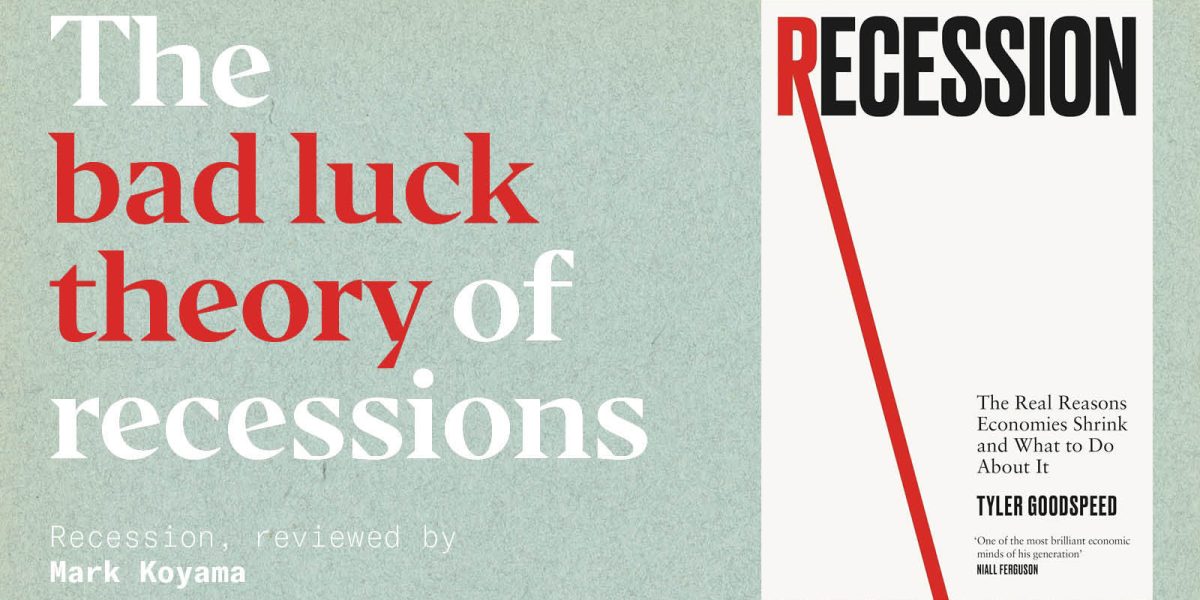
**Tyler Goodspeed’s Recession Review: A Data-Driven Guide to Economic Shrinkage**
A new book from Hoover Institution fellow Tyler Goodspeed, Recession: The Real Reasons Economies Shrink and What to Do About It, promises to untangle the mysteries of economic downturns. With a wealth of data and historical anecdotes, Goodspeed dissects the complex factors that contribute to recessions.
Goodspeed identifies boom-bust cycles as a major driver of economic contraction. He cites the 1929 stock market crash, which led to a devastating depression, and the 2008 financial crisis, which was triggered by a housing market bubble.
From Cyclical to Semi-Cyclical Patterns
Goodspeed also explores the notion that recessions follow cyclical or semi-cyclical patterns. He draws on the work of Irving Fisher, a pioneering economist who argued that economic downturns are inevitable and that policymakers should focus on mitigating their impact. Goodspeed also engages with the ideas of Friedrich Hayek, a philosopher-economist who warned against the dangers of central planning.
However, Goodspeed challenges the idea that recessions are solely the result of cyclical patterns. He suggests that policymakers should view recessions as the product of surprise changes in the economy, such as unexpected shifts in consumer behavior or technological disruptions.
Implications for Policymakers
So what does this mean for policymakers? According to Goodspeed, a more nuanced understanding of recessions is essential for developing effective responses to economic downturns. He argues that policymakers should focus on building resilience in the economy, rather than relying on traditional stimulus measures.
Goodspeed’s book is data-rich and engaging, offering policymakers and economists a fresh perspective on the causes and consequences of recessions. As he notes, the key to navigating economic crises is to understand the complex interplay of factors that contribute to recession.
What this means: Policymakers need to adopt a more flexible and nuanced approach to economic policy-making, one that takes into account the complex and unpredictable nature of recessions.