**Asian Stocks Soar, Oil Prices Plummet**
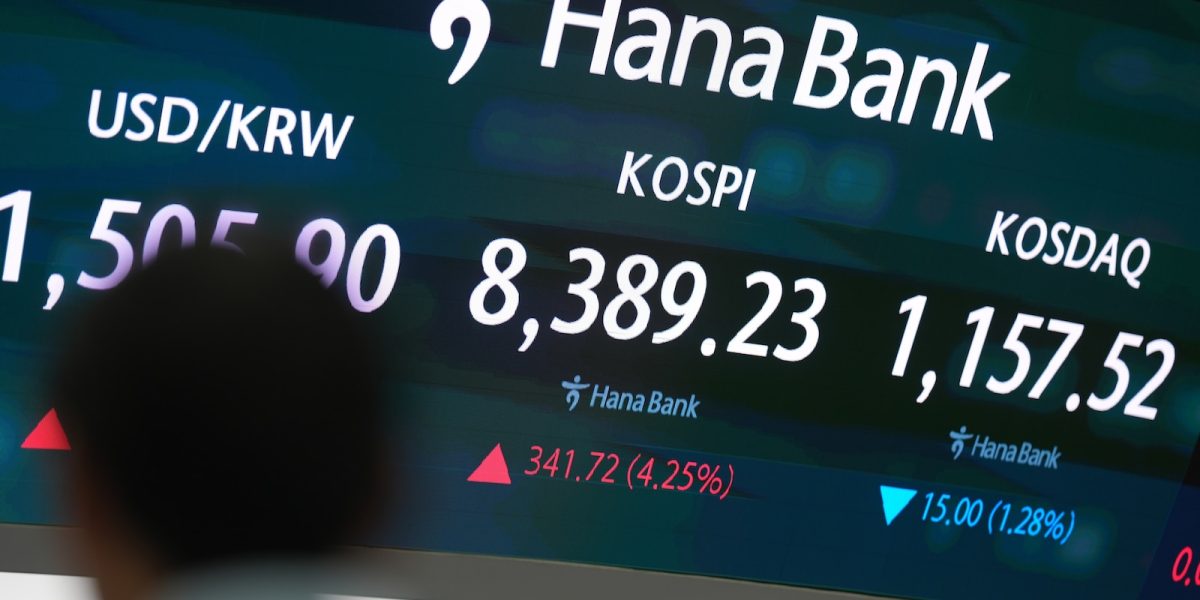
Asian shares are mostly higher, with South Korea’s Kospi jumping nearly 5%, after the US stock market hit fresh records.
The Kospi’s surge was the biggest move among major indexes in the region, as investors remained bullish on the prospects of economic growth. Taiwan’s benchmark also saw significant gains, as the tech-heavy Nasdaq composite continued to lead the charge in the US market.
Oil prices, which had been volatile in recent weeks, fell sharply, with Brent crude dropping 2.3% and WTI crude down 2.8%. The decline was likely driven by a combination of factors, including a stronger US dollar and a reduction in tensions between major oil-producing countries.
**What this means**: Investors are increasingly optimistic about the global economy, with many markets rallying on the back of strong US performance. However, the drop in oil prices is a sign that markets are still adjusting to shifting economic conditions.
While the US stock market’s continued ascent may be a sign of strength, it also raises concerns about asset bubbles and the potential for market corrections. The Federal Reserve has been monitoring inflation and asset valuations closely, and may adjust monetary policy in response to the market’s performance.
The sharp decline in oil prices has also raised questions about the global economy’s growth prospects. If oil prices remain low, it could indicate a slowdown in economic activity, particularly in countries heavily reliant on oil exports.
**Asian markets to watch**: The next few weeks will be crucial for Asian markets, as investors wait to see if the rally can continue. China’s Shanghai Composite Index has been lagging behind other markets in the region, and may be the next to make a significant move.
Meanwhile, Japan’s Nikkei 225 is hovering around multi-year highs, and could potentially break through to new territory if the market remains upbeat on the global economy.