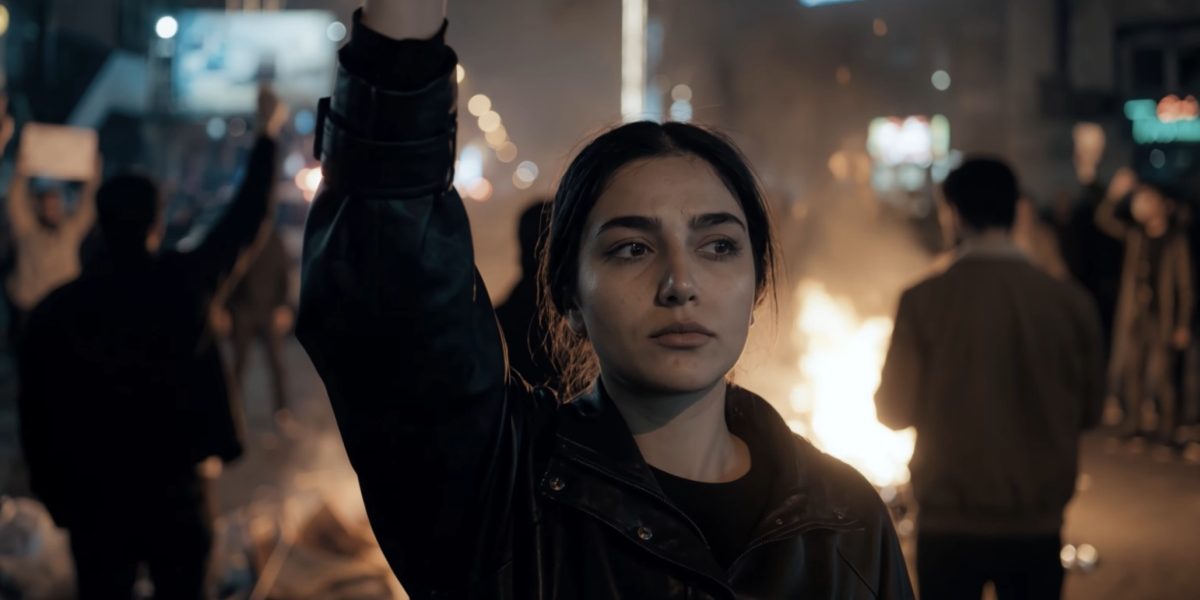
A first-of-its-kind film, Dreams of Violets, is making headlines as the first fully AI-generated docudrama to premiere at the prestigious Tribeca Festival. This 75-minute movie, born from the minds of AI startup Fountain 0, sheds light on the January protests in Iran.
The film’s trailer reveals a haunting portrayal of a nation in turmoil, with AI-driven visuals and a gripping narrative that draws viewers in. According to Fountain 0’s founder, Emily Chen, the project aimed to explore the complexities of human emotion through AI-generated storytelling.
While AI-generated content has been on the rise in recent years, Dreams of Violets marks a significant milestone in its application to feature-length filmmaking. Fountain 0’s technology enables the creation of entire scripts, storyboards, and even entire scenes using only AI algorithms.
This breakthrough has sparked both excitement and trepidation, with some lauding its potential to democratize storytelling and others warning of the risks of AI-generated disinformation. As the lines between human and artificial creation blur, questions about authorship and accountability begin to surface.
What this means
Dreams of Violets’ premiere at Tribeca Festival serves as a harbinger for the future of AI-generated content. As we move forward, we can expect to see more innovative applications of AI in filmmaking and beyond. This might include the creation of personalized stories, the amplification of underrepresented voices, or even the emergence of entirely new genres.
Ai-generated storytelling: A double-edged sword?
While AI-generated films like Dreams of Violets promise to revolutionize the art of storytelling, they also raise concerns about the loss of human touch and the potential for AI-driven propaganda. The intersection of human creativity and AI-driven output will undoubtedly be a subject of ongoing debate and exploration in the years to come.