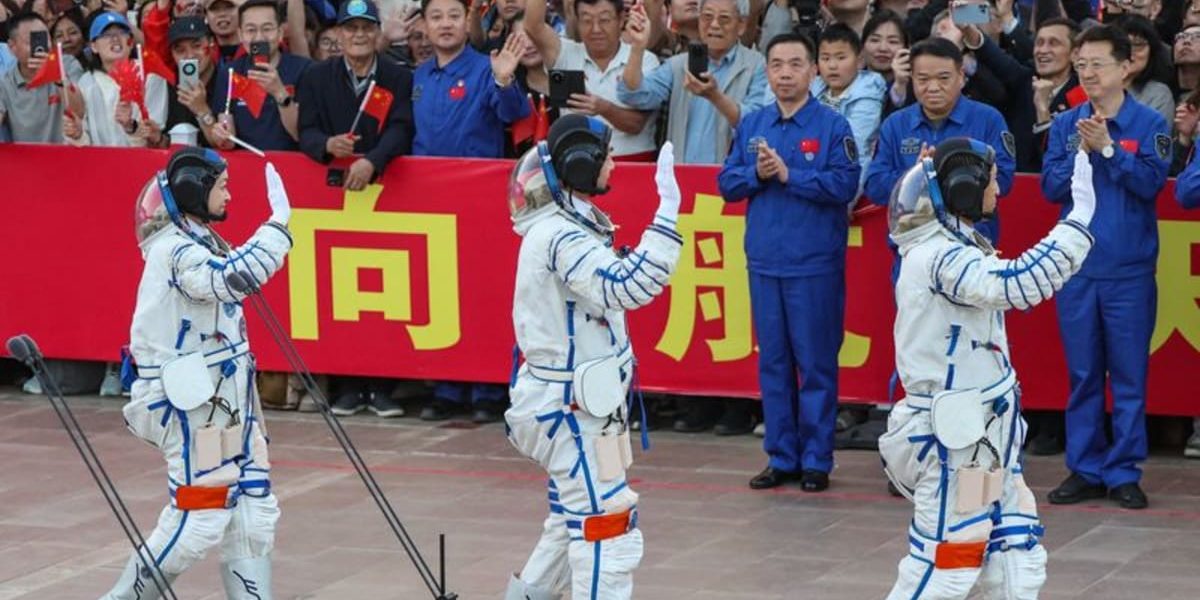
China has launched a rocket carrying its longest-duration astronaut to date, marking a major milestone in the country’s quest for space exploration.
Moon Landing Ambitions
The Shenzhou-23 mission blasted off from the Jiuquan Satellite Launch Center in Gansu province on Sunday, carrying astronaut **Pei Zhiyuan** to the Tianhe space station, where he will spend the next 12 months in orbit. This extended stay is a crucial step towards China’s ambitious goal of landing humans on the moon by 2030.
China’s space program has made significant strides in recent years, with the country landing a rover on Mars in 2020 and sending a successful lunar sample return mission to the moon in 2020. The Shenzhou-23 mission is a key component of Beijing’s long-term plan to establish a sustainable presence in space.
What this means
The success of the Shenzhou-23 mission demonstrates China’s growing capabilities in space exploration and its commitment to becoming a major player in the field. As the country’s space program continues to advance, it’s likely that we’ll see increased collaboration between China and other nations on space-related projects – potentially including joint missions to the moon and beyond.
In practical terms, the Shenzhou-23 mission marks a significant step forward for China’s space industry, with potential implications for the development of new technologies, space-based infrastructure, and even space tourism.
Year-Long Space Station Stay
Astronaut Pei Zhiyuan will spend the next 12 months living and working on the Tianhe space station, conducting scientific experiments and testing the limits of long-duration spaceflight. The mission is designed to help China prepare for its future human spaceflight missions, including the planned lunar landing in 2030.
While the exact details of the Shenzhou-23 mission are still shrouded in secrecy, one thing is clear: China’s space program is rapidly advancing, and the country is poised to play a major role in shaping the future of space exploration.