Researchers at **Ge et al.** have pinpointed a crucial mechanism by which stress granules prevent a type of cancer cell death.
Stress granules, typically known for their role in protecting cells from damage by storing RNA and proteins, have been found to also restrain ferroptosis, a form of cell death caused by oxidative stress and iron accumulation. By sequestering ferritin, a protein involved in iron metabolism, stress granules prevent ferritin from contributing to ferroptosis in glioblastoma stem cells, which are responsible for the growth and spread of brain tumors.
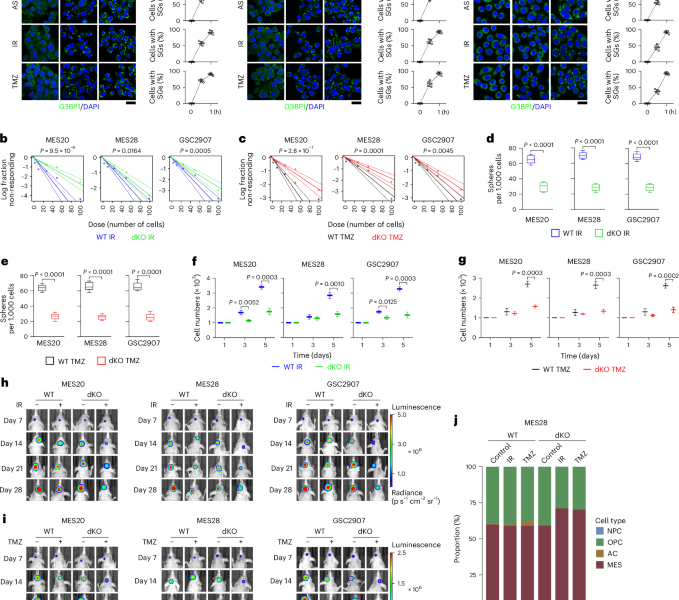
This discovery was made possible by a study that analyzed the response of glioblastoma stem cells to irradiation and the chemotherapy drug temozolomide. The researchers found that under stress conditions, stress granules rapidly form and store ferritin, effectively shielding it from interacting with other molecules that trigger ferroptosis.
The role of ferritin in ferroptosis has been a topic of interest in cancer research, with many studies suggesting its involvement in the disease. The finding that stress granules can sequester ferritin highlights a new potential therapeutic strategy for targeting ferroptosis in glioblastoma treatment.
What this means is that researchers may be able to develop new treatments that specifically target stress granules to prevent ferroptosis, potentially improving the effectiveness of current therapies for glioblastoma.
The study’s findings also provide valuable insights into the complex interactions between stress granules, ferritin, and ferroptosis, pointing to the importance of understanding the molecular mechanisms underlying cancer cell death.
Further research is needed to explore the therapeutic potential of stress granules in glioblastoma treatment, but the findings of this study offer a promising new avenue for investigation.