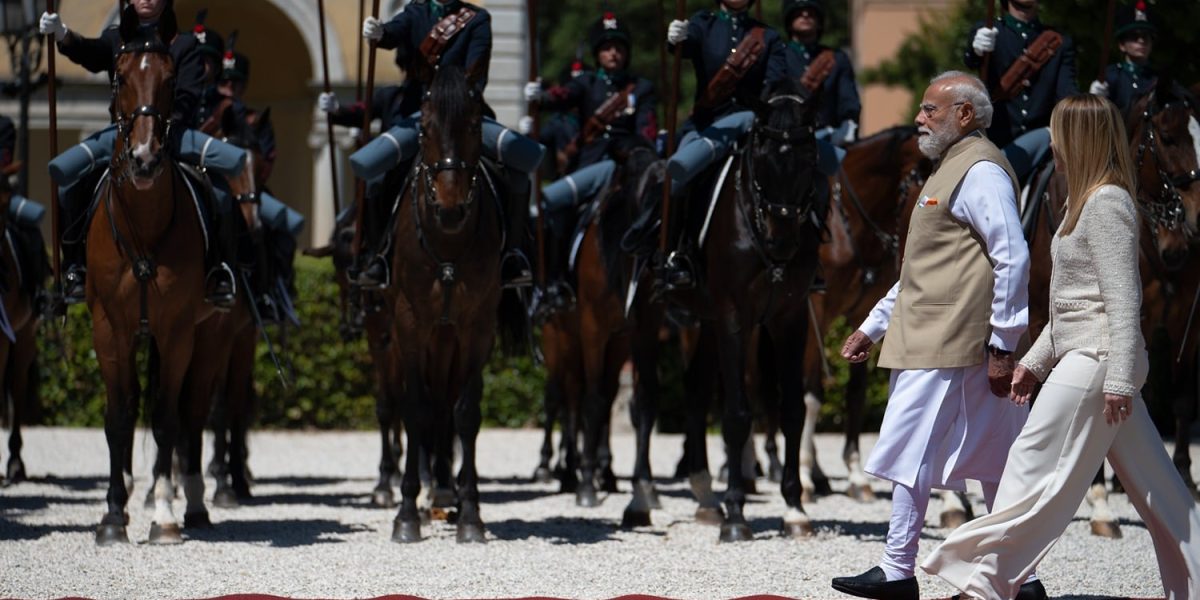
India’s Prime Minister Narendra Modi just wrapped up a high-profile tour of Europe, meeting with leaders from Italy, Netherlands, Norway, and Sweden, as well as attending the India-Nordic Summit.
A Misread on Modi’s Success
The visit marked a renewed push for India’s global engagement, with Modi touting the country’s economic growth and democratic credentials. However, many Western analysts have a decidedly mixed view of Modi’s government, often portraying it as increasingly authoritarian and illiberal.
This narrative takes root in part because of Modi’s Bharatiya Janata Party’s (BJP) strong nationalist and Hindu-first agenda, which has led to a backlash against minority communities, including Muslims and Dalits. Critics argue that these policies erode India’s liberal traditions and undermine its commitment to democracy.
Yet, while it’s true that India is experiencing a shift to the right, the country remains a robust democracy, albeit with its own distinct flavor. India has a functioning parliament, an independent judiciary, and a free press – all cornerstones of democratic governance. In contrast to some other countries, India’s elections are free and fair, with multiple parties participating and voters exercising their franchise freely.
What’s Driving the Misread?
So, why do Western observers seem to miss the mark on Modi’s India? One reason is a lack of nuance in analyzing India’s complex politics. Western media often simplifies India’s many social and economic challenges, reducing them to a binary choice between ‘liberal’ and ‘authoritarian’.
Another factor is the media’s focus on high-profile controversies surrounding Modi’s government, such as the Citizenship Amendment Act and the treatment of Muslims. While these issues are undeniably contentious, they don’t necessarily define the entirety of Modi’s agenda or the state of Indian democracy.
A More Accurate Picture
In reality, India’s democratic system is robust enough to withstand the challenges of a multiparty system and diverse cultural identities. While Modi’s government may be criticized for its policies, the country remains committed to democratic principles and institutions.
What this means: Western observers should be more cautious in their assessment of Modi’s India, recognizing the complexity and nuance of the country’s politics. By doing so, they can better understand the intricacies of India’s democratic system and avoid overstating the country’s shift towards authoritarianism.