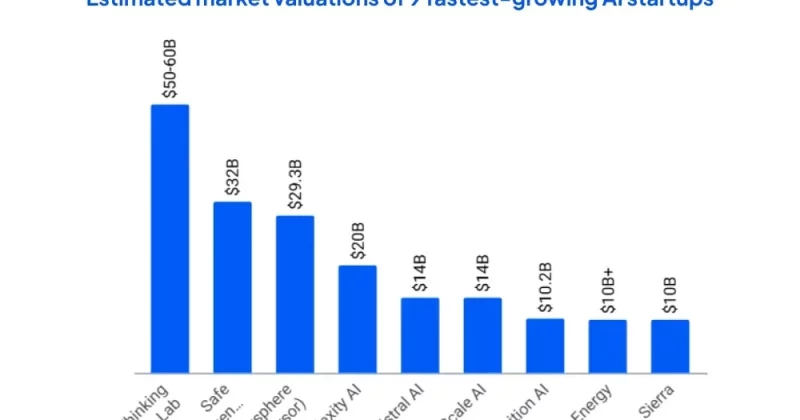
DeepSeek, a Chinese AI lab, is seeking $10.2 billion in funding for a mission focused on open-source artificial general intelligence (AGI), sparking potential disruption in the AI market.
While commercial AI providers are used to dominating the industry with their proprietary software, DeepSeek is taking a bold approach by prioritizing the development of AGI – a type of AI that can perform any intellectual task that humans can – over commercial products. This means that the lab won’t be selling software in the classical sense, instead choosing to share its research and advancements with the global community under an open-source model.
Challenging the Status Quo
The decision to focus on AGI and open-source strategy could have significant implications for the AI market. Commercial AI providers, who rely heavily on proprietary software to drive revenue, may struggle to adapt to this new paradigm. As a result, prices for AI solutions could plummet, forcing companies to rethink their business models.
DeepSeek’s strategy is also likely to impact global AI dynamics, potentially creating a more open and collaborative AI ecosystem. By making its research and advancements publicly available, the lab will enable other researchers and developers to build upon its work, accelerating the pace of AI innovation.
A New Era for AI
The funding talks with DeepSeek represent a significant turning point in the history of AI development. If successful, the lab’s mission will demonstrate the viability of AGI and open-source collaboration as a viable alternative to commercial AI solutions.
This could have far-reaching consequences for the tech industry, from AI-powered industries like healthcare and finance to emerging sectors like autonomous transportation and renewable energy.
What this means
The potential disruption caused by DeepSeek’s AGI and open-source strategy will likely lead to a more democratized AI ecosystem, where innovative ideas and advancements are shared freely among researchers and developers. Businesses and industries will need to adapt to this new landscape, and those that fail to do so may find themselves at a significant disadvantage.