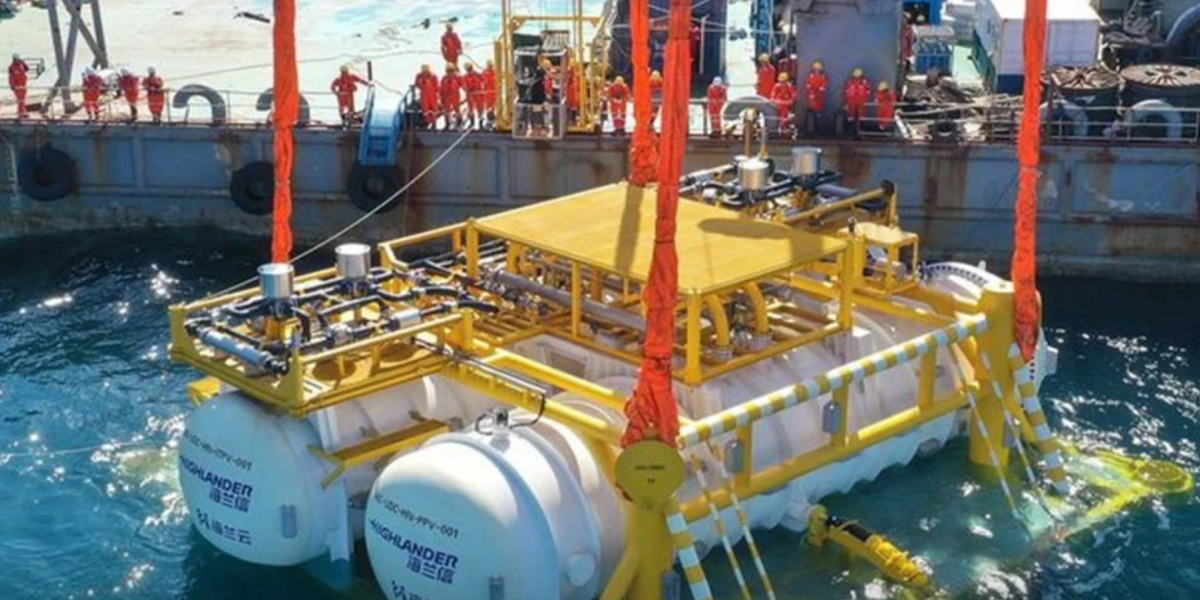
China has unveiled an underwater data center, touted as the world’s first, which houses nearly 2,000 servers and is powered by offshore wind energy while utilizing the sea to cool its systems.
This submersible facility, situated near Shanghai, marks a significant shift in data center design. By harnessing the cooling properties of seawater, Chinese engineers have mitigated the need for traditional industrial chillers that constantly drain power – a major contributor to the sector’s carbon footprint. In contrast, this underwater data center draws energy from nearby wind turbines, further reducing its dependency on the grid.
The project’s lead architect, Wang Zhan, claims that the data center’s efficiency is a major breakthrough. By leveraging the natural temperature of the ocean, their design minimizes energy consumption while maintaining optimal server operating conditions.
Reducing Infrastructure Demands
The rapid expansion of data centers worldwide has put immense pressure on local infrastructure. These facilities often rely on industrial-scale chillers to regulate their internal temperature, which can account for up to 40% of their overall power consumption. By abandoning these traditional cooling methods, the Chinese underwater data center sets a new precedent for the industry.
Long-term Implications
China’s innovative approach to data center design could have far-reaching consequences for the global tech sector. As energy demands continue to escalate, companies and policymakers will likely reassess their priorities, exploring alternative solutions to mitigate the environmental impact of data centers. The success of this underwater facility may accelerate the adoption of similar eco-friendly designs, paving the way for a more sustainable future.
What this means: Data center operators will need to re-evaluate their approach to energy consumption and cooling. Expect a shift towards more innovative, sustainable designs that harness the power of natural resources – like wind, water, or even the earth itself – to minimize their carbon footprint.