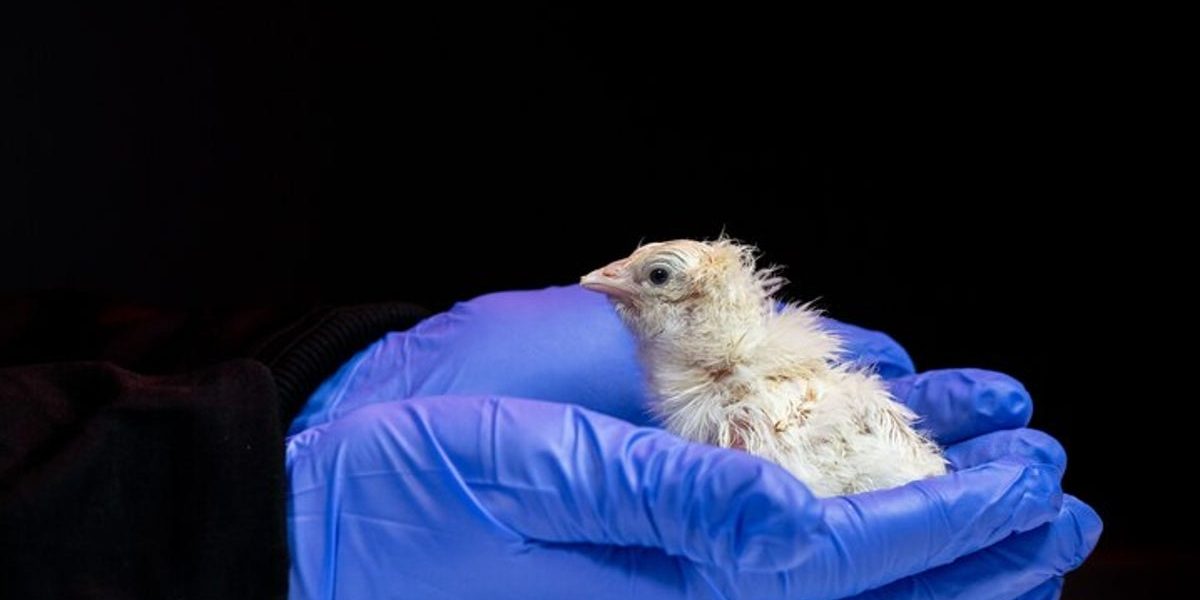
Colossal Biosciences, a startup that’s made waves in the scientific community with claims of “de-extinction,” has unveiled an “artificial egg” designed to resurrect extinct birds – but experts say the achievement is more about technical prowess than true revival.
Colossal Biosciences’ Artificial Egg: A Technical Feat, Not De-Extinction
The company, which has drawn criticism for its high-profile claims, says the artificial egg is a crucial step towards bringing back extinct species. But Dr. Jessica Wade, a geneticist at Imperial College London, says this is a classic example of “science spin.” “De-extinction” is a term that implies the actual revival of extinct species, Wade argues, which is not the case here.
The artificial egg is a remarkable achievement in synthetic biology, with Colossal Biosciences using CRISPR gene editing to create a chicken embryo that would eventually hatch into a bird with the characteristics of the extinct species. However, critics point out that even if the egg hatches, the resulting bird will be a hybrid of sorts – a mix of chicken and extinct species – rather than a pure, authentic member of the extinct species.
The Science of De-Extinction: Separating Fact from Fiction
The concept of de-extinction has captured the public imagination, but scientists are quick to separate fact from fiction. De-extinction is not about simply bringing back extinct species through genetic manipulation, but rather about understanding the complex mechanisms that led to their extinction in the first place.
De-extinction, in the true sense of the word, would require a far more sophisticated understanding of genetics and ecology. It would also require a significant amount of time, money, and resources, not to mention the potential risks and unintended consequences of introducing an extinct species back into the wild.
What This Means
While Colossal Biosciences’ artificial egg is an impressive technical feat, it’s essential to separate this achievement from the hype surrounding de-extinction. What this means is that the field of synthetic biology is advancing rapidly, but we need to be cautious about the language used to describe these breakthroughs.
The reality is that we’re not going to “bring back” the woolly mammoth or the dodo bird through genetic manipulation. Instead, we’re pushing the boundaries of what’s possible in synthetic biology, and that’s an exciting and valuable pursuit in its own right.