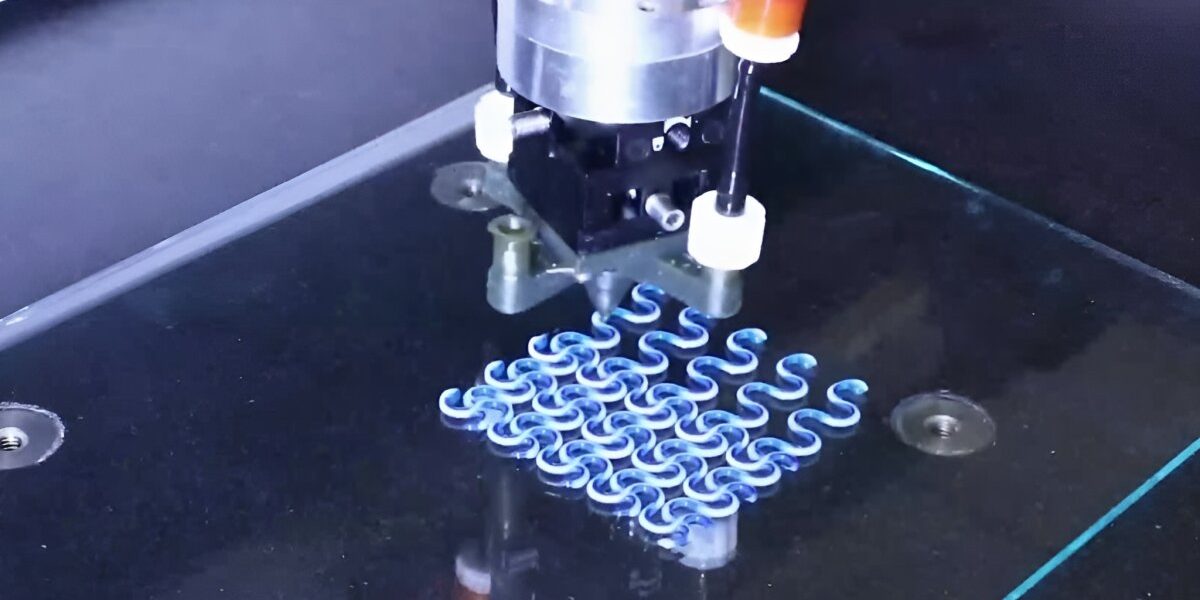
New 3D Printing Tech Revolutionizes Robot Muscles
A team of engineers at the University of California, Berkeley, has developed a pioneering 3D printing technique that could equip robots with human-like muscles, a crucial step towards creating more lifelike and agile robotic assistants.
Printing Muscle-Like Tissue
The technology uses a specialized type of 3D printing that can create complex structures with varying levels of stiffness, similar to the way real muscles adapt to different situations. This breakthrough was achieved by combining traditional 3D printing materials with a new type of “biomimetic” ink that mimics the properties of natural tissues.
This cutting-edge innovation has the potential to transform the field of robotics, enabling robots to move more naturally and interact with their environment in a more human-like way. No longer will robots be restricted by stiff, rigid limbs – with this technology, they could be designed to flex, stretch, and even recover from injuries, much like humans do.
Implications for Robotics
The development of muscle-like robotics could have far-reaching implications for industries such as healthcare, manufacturing, and search and rescue. Imagine robots that can navigate through tight spaces or assist patients with delicate procedures, all with the flexibility and dexterity of a human hand.
This technology is still in its early stages, but the possibilities are vast – and it won’t be long before we see robots in various forms, from humanoid assistants to advanced prosthetics. It’s a future where robots don’t look like robots, but rather like an extension of human capabilities.
**What this means**: As robots become increasingly indistinguishable from humans, we can expect to see more widespread adoption of robotics in industries where adaptability and flexibility are key. With muscle-like robotics on the horizon, the possibilities for innovation are endless – and the future of AI is looking more human-like by the day.