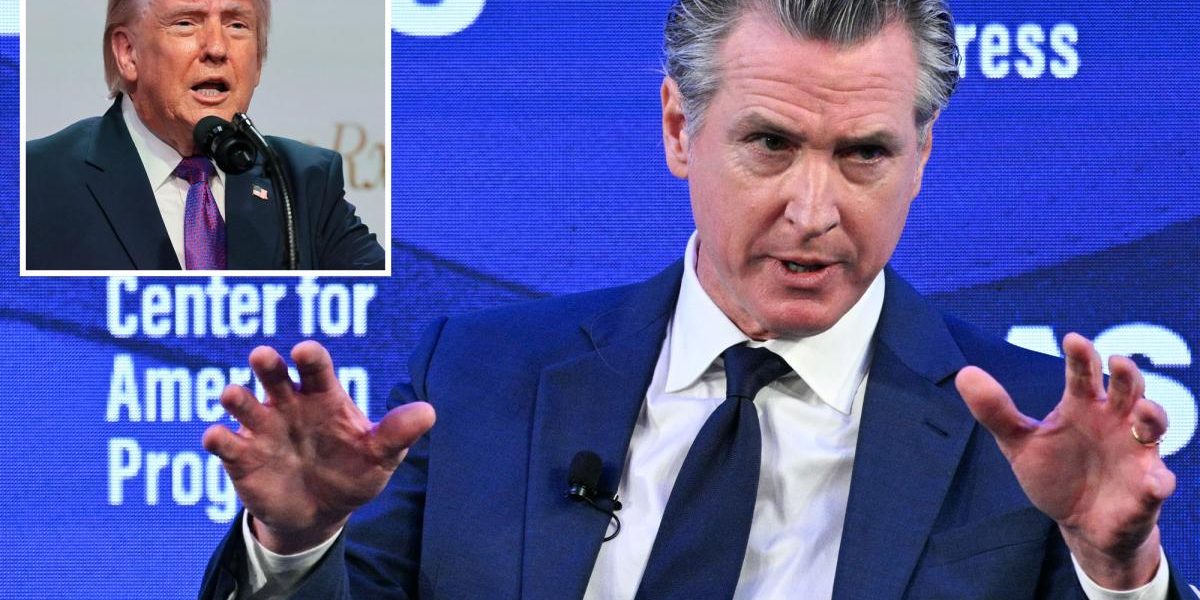
Gavin Newsom just proposed a radical plan to combat the devastating effects of AI on American workers, and it’s a direct shot at Donald Trump’s economic record.
As the California governor’s term comes to a close, many speculate that he’s accelerating his positions to position himself for a potential presidential run in 2028. Newsom’s plan, which involves implementing broad economic safety nets to protect workers displaced by automation, is a thinly veiled critique of Trump’s economic policies, which he calls “broken.”
Aiming at Trump’s Record
The plan, still in its infancy, is centered around addressing the growing concern that AI will displace millions of American workers, exacerbating income inequality and social unrest.
Newsom is not shy about framing his proposal as a response to Trump’s failures. “The economy is broken, and it’s broken because of the policies that have been pursued over the past few years,” he said, pointing to the stagnant wages and rising poverty rates under Trump’s watch.
The AI Displacement Crisis
The issue of AI displacement is no longer a distant threat; it’s already a harsh reality for many Americans. According to recent studies, up to 40% of US jobs are at high risk of being automated, with AI and machine learning technologies set to replace entire industries.
Newsom’s proposed safety nets aim to cushion the blow of this displacement, ensuring that workers who lose their jobs due to automation can access education and retraining programs, as well as a basic income guarantee to keep them afloat.
What this means
If Newsom’s plan becomes a reality, it could fundamentally change the way we approach economics and social welfare in this country. It would provide a vital safety net for workers displaced by AI, and signal a major shift towards a more compassionate and forward-thinking approach to economic policy.
Only time will tell if Newsom’s plan gains traction, but one thing is clear: the stakes are high, and the future of work is at the forefront of this debate. As the AI-dominated economy continues to reshape the American workplace, one thing is certain – the conversation about how to protect workers will only continue to grow louder.