
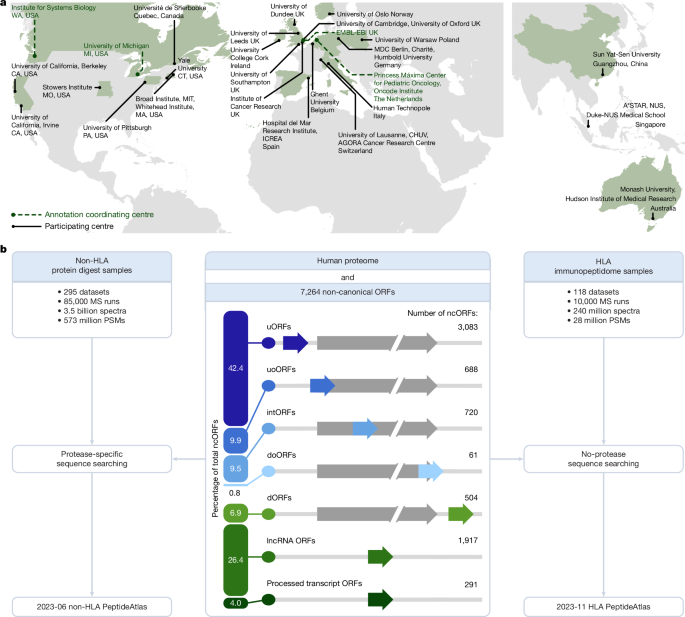
A massive proteomics analysis by the TransCODE Consortium has uncovered a treasure trove of tiny proteins, known as microproteins and peptideins, that were previously unknown to scientists. These minuscule molecules are encoded by non-canonical open reading frames, which don’t follow the traditional rules of protein-coding genes. The study, which analyzed a vast amount of data from the PeptideAtlas database, has significantly expanded our understanding of the human proteome.
What are microproteins and peptideins?
Microproteins are short proteins, typically consisting of fewer than 100 amino acids, that are often overlooked by traditional genomics and proteomics methods. Peptideins, on the other hand, are even smaller, comprising just a few amino acids. Despite their small size, these molecules can have big effects on cellular function and human health. The TransCODE Consortium’s research has identified thousands of these tiny proteins, which are now being hailed as a new frontier in proteomics research.
The PeptideAtlas database
The PeptideAtlas database is a massive repository of proteomics data, containing information on over 295 datasets from 1,172 different experiments. The database is constructed from data submitted to the ProteomeXchange Consortium, a global network of researchers sharing proteomics data. The latest build of the human non-HLA PeptideAtlas, released in June 2023, includes data from 50 different sources, making it one of the most comprehensive resources of its kind. By searching this database, researchers can identify patterns and connections between different proteins and peptides, leading to new insights into human biology and disease.
Implications for human health
The discovery of these microproteins and peptideins has significant implications for our understanding of human health and disease. Many of these tiny proteins are likely to play critical roles in cellular function, and their dysregulation could contribute to a range of diseases, from cancer to neurodegenerative disorders. By studying these molecules, researchers may uncover new targets for therapy and develop more effective treatments for a range of conditions. With the TransCODE Consortium’s research, the field of proteomics has taken a major leap forward, and scientists are eager to explore the many secrets that these tiny proteins hold. 1,172 experiments have already been conducted, and the results are just beginning to reveal the vast complexity of the human proteome.


