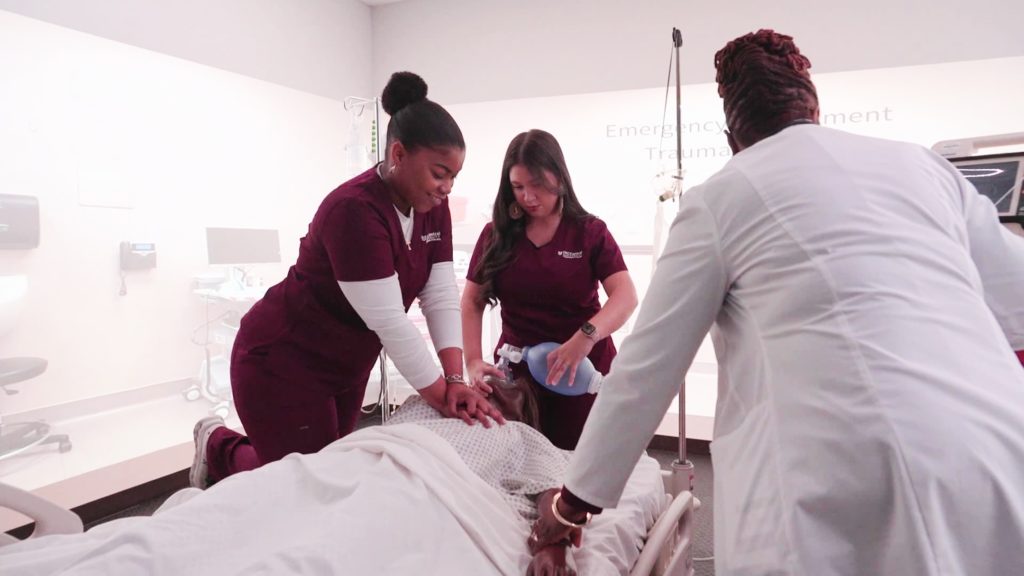
Schools are using AI-powered virtual reality (VR) to train the next generation of nurses, making healthcare education more engaging and effective.
AI-Powered Simulations
VR technology and AI simulations are being integrated into nursing programs at various institutions to mimic real-world healthcare scenarios. Students wear VR headsets and interact with digital patients, receiving feedback and guidance from AI-powered instructors. This immersive experience helps students build confidence, develop critical thinking skills, and improve patient care.
Interactive Training
The AI-powered platform assesses students’ performance and adjusts the difficulty level and scenario complexity accordingly. This ensures students receive targeted feedback and are challenged at their own pace. Additionally, the system provides real-time data analysis, allowing educators to identify areas where students need extra support and make data-driven decisions to improve curriculum development.
Real-World Applications
These innovative training methods are preparing the next generation of nurses for the demands of modern healthcare. With a focus on empathy, communication, and technical skills, students are better equipped to tackle the complex challenges of patient care. As healthcare continues to evolve, the integration of AI and VR in nursing education is set to become an essential aspect of medical training.
What this means: By leveraging AI and VR in nursing education, schools can provide students with a more engaging, effective, and realistic training experience. This, in turn, can lead to improved patient outcomes, reduced medical errors, and a more skilled workforce in the healthcare industry.