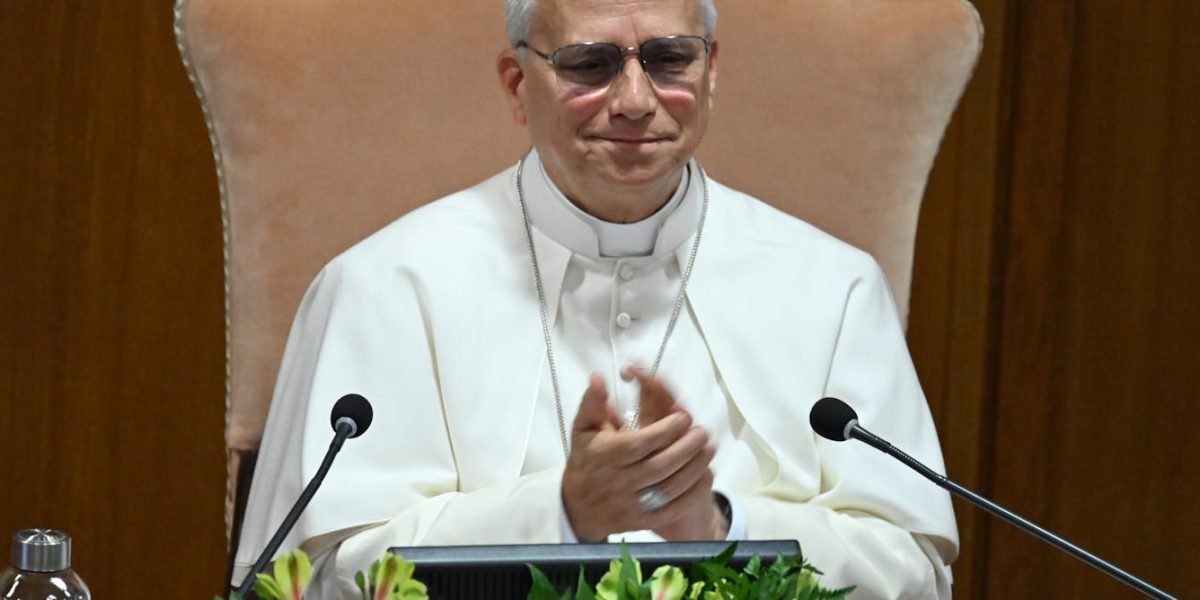
The Catholic Church’s top leader has weighed in on the existential risks posed by AI, sparking a critical conversation about the technology’s true nature and its impact on society. Pope Leo XIV’s inaugural encyclical letter has identified artificial intelligence as one of the most pressing moral challenges of our time.
A Mirror to Society
The Pope’s statement that AI “is never truly neutral” suggests that the tech reflects the biases and values of those who created it. Essentially, he’s saying that AI is a product of humanity’s collective conscience. This idea challenges the notion that AI can be somehow neutral, or that it operates independently of human influence.
Acknowledging this inherent bias, the Pope calls for greater ethical oversight of AI development. He recognizes that the unchecked advancement of AI poses risks not just to individual workers, but to the social fabric as a whole. The Pope’s words come as AI continues to seep into every corner of our lives, from healthcare to education.
Protecting the Marginalized
The Pope has specifically highlighted the need to protect workers who risk being displaced by automation. As AI assumes more tasks and replaces human labor, marginalized communities – often already struggling with economic inequality – face even greater hardship. The Vatican leader urges policymakers to consider the long-term implications of AI and ensure that its development aligns with human dignity.
The encyclical also touches on the issue of accountability in AI development. Who – or what organization – should be held responsible for ensuring that AI systems prioritize human well-being? The Pope’s call for greater transparency and oversight in AI development is a timely reminder that this technology doesn’t exist in a vacuum.
A Wake-Up Call for Policymakers
Pope Leo XIV’s encyclical letter serves as a wake-up call for policymakers and tech leaders. It’s a stark reminder that AI’s impact extends far beyond the digital realm, with real-world consequences for workers, communities, and our collective future. The Pope’s words should prompt us to re-examine our relationship with AI and consider the long-term implications of this rapidly advancing technology.
What this means: As AI development accelerates, it’s essential to prioritize ethics, accountability, and transparency. Policymakers must take a proactive stance in protecting workers and marginalized communities from the risks posed by automation. The Pope’s call to action serves as a timely reminder that AI’s true potential will only be realized when it serves humanity’s best interests.