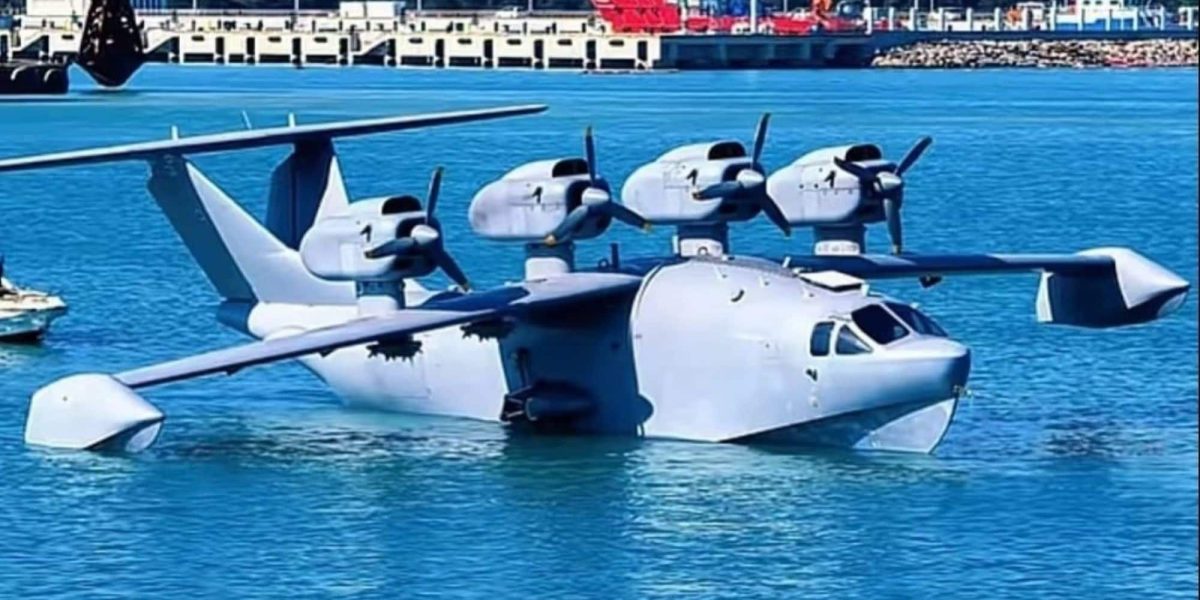
China’s Ekranoplan, dubbed the “Bohai Sea Monster,” has been spotted in its most detailed images yet, offering a glimpse into the military capabilities of this ground effect vehicle. The new photos, shared on Chinese social media, reveal underwing weapons pylons, hinting at a multifaceted role beyond rapid support and resupply operations in the South China Sea.
What We Know So Far
The Ekranoplan’s first appearance in July 2025 sent shockwaves through the defense community, sparking intense speculation about its purpose and capabilities. This new crop of images, taken at an unspecified seaport, shines a light on the vehicle’s design and potential applications.
The presence of underwing weapons pylons, visible in several photos, suggests that the Ekranoplan may be equipped for strike missions in addition to its previously suspected role in providing rapid support and resupply for amphibious operations. These pylons could potentially carry a variety of munitions, including anti-ship missiles, bombs, or rockets.
Implications for the South China Sea
The South China Sea has long been a contentious region, with multiple nations vying for control and influence. China’s deployment of the Ekranoplan, a potentially formidable military asset, adds a new layer of complexity to the mix. The presence of underwing weapons pylons implies that China may be prepared to use this platform in a more aggressive manner, underscoring the need for regional nations to reevaluate their strategic positions.
The Ekranoplan’s capabilities and deployment will surely be closely watched by the international community, particularly by regional powers such as the US, Japan, and the Philippines. As tensions in the South China Sea continue to escalate, the stakes are higher than ever, and China’s Ekranoplan is just one piece of the increasingly complex puzzle.
What This Means
The emergence of China’s Ekranoplan, with its potentially strike-capable capabilities, sends a clear message to regional nations: China is committed to asserting its influence in the South China Sea. For nations with interests in the region, this development serves as a reminder to reevaluate their military strategies and diplomatic approaches in light of China’s rapidly expanding capabilities.