China’s Long March to the Moon Begins with Record-Breaking Space Mission
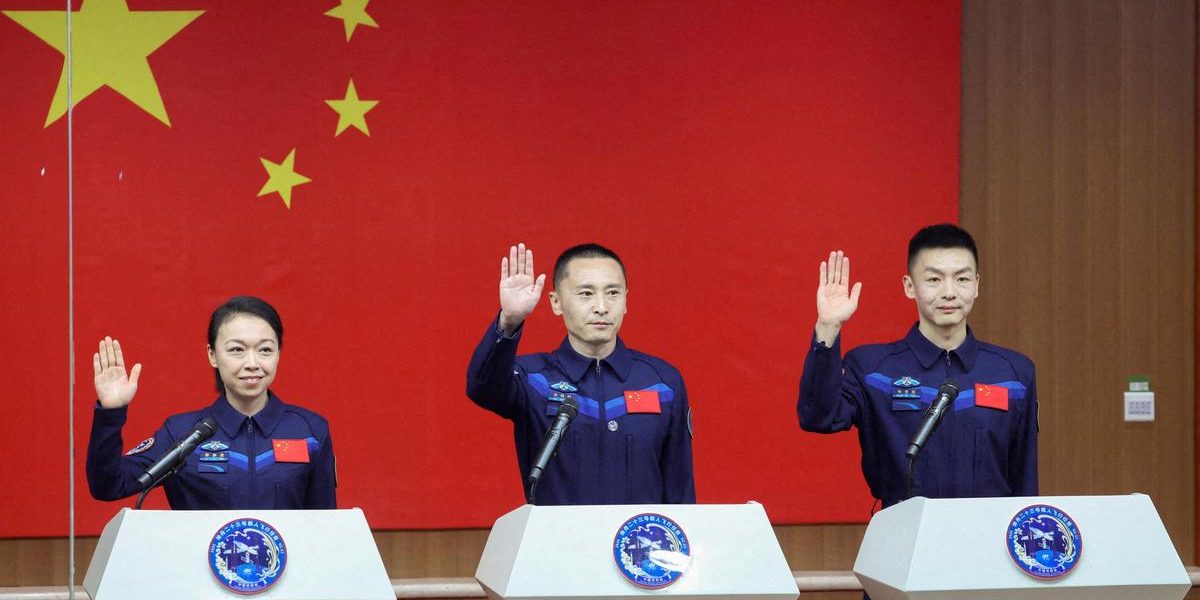
China is pushing the boundaries of space travel with a record-breaking mission that will see an astronaut spend a year on the country’s space station. Starting on Sunday, this unprecedented mission marks a significant step towards China’s ambitious goal of landing humans on the moon by 2030.
Part of Beijing’s broader space program, the mission will enable scientists to study long-duration human physiology in space, providing valuable insights into the effects of prolonged space travel on the human body. This knowledge will be critical as China works towards establishing a permanent lunar base, a partnership with Russia by 2035.
The space station, known as Tiangong, was launched in 2021 and has been hosting astronauts for short-term stays. This year-long mission, however, marks a significant increase in the duration of stays on the station. The extended stay will also give scientists a chance to test the space station’s systems and infrastructure under more extreme conditions.
Space Race Intensifies
The announcement comes amidst an intensifying space race with the United States, which has also set its sights on the moon. NASA’s plans to return humans to the moon by 2025, with the aim of establishing a sustainable presence on the lunar surface, have raised the stakes. China’s mission, therefore, is seen as a significant move to stay ahead of its competitor.
What this means for space enthusiasts and scientists is that we can expect to see significant advancements in the field of space travel. China’s year-long mission will provide valuable insights into the effects of prolonged space travel on the human body, paving the way for longer, more complex missions in the future.
Ambitious Goals Ahead
With the launch of the year-long mission, China is one step closer to achieving its ambitious goal of landing humans on the moon by 2030. Russia’s involvement in the lunar base project means that Beijing is not alone in its endeavor, but the space race with the United States remains a pressing concern. As the stakes continue to rise, one thing is clear: the next decade will be marked by significant advancements in space travel and exploration.