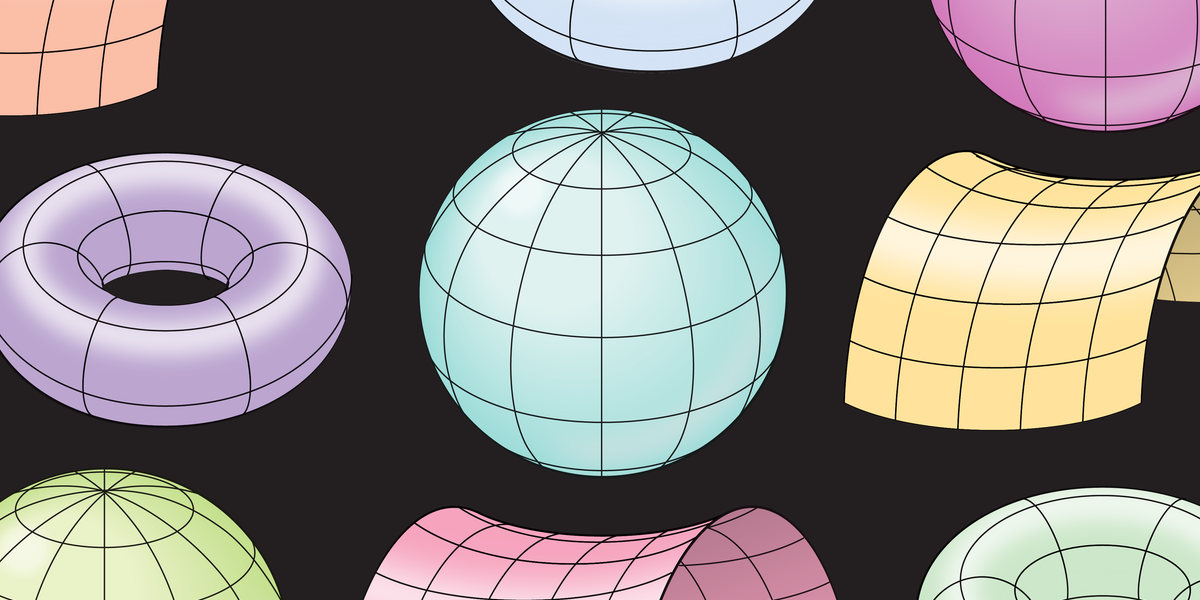
Physicists are exploring 18 possible shapes the universe could have, despite our own universe appearing flat, according to a recent study.
The Shape of the Universe: More Than Meets the Eye
The universe’s shape has been a topic of debate among physicists for decades. While some may argue that the universe is either flat or curved, the truth is more complex. In fact, our understanding of the universe’s shape is still in its infancy, with many theories yet to be explored. The latest study proposes that the universe could resemble one of 18 possible shapes, including a donut.
Researchers have long been aware of the universe’s flatness, which is observed by studying the behavior of galaxies and other celestial objects. However, this observation doesn’t rule out the possibility of other shapes. According to Einstein’s theory of general relativity, the universe’s shape is determined by its mass and energy density. This means that even if the universe appears flat at large scales, it could still be curved in ways that aren’t immediately apparent.
The 18 Possible Shapes of the Universe
The study proposes that the universe could have one of 18 possible shapes, including:
- A donut shape, where the universe is curved in a toroidal (doughnut-like) fashion.
- A saddle-shaped universe, where the curvature is negative in certain regions.
- A universe with multiple connected regions, where different parts of the universe are separate from one another.
What This Means
The study’s findings have significant implications for our understanding of the universe’s origins and evolution. If the universe is indeed curved in ways that aren’t immediately apparent, it could challenge our current understanding of the cosmos. The researchers behind the study hope that their findings will inspire further investigation into the universe’s shape and the mysteries that lie within.
By exploring the 18 possible shapes of the universe, physicists can gain a deeper understanding of the cosmos and the fundamental laws that govern it. This knowledge could, in turn, lead to new breakthroughs in fields like cosmology, astrophysics, and theoretical physics.