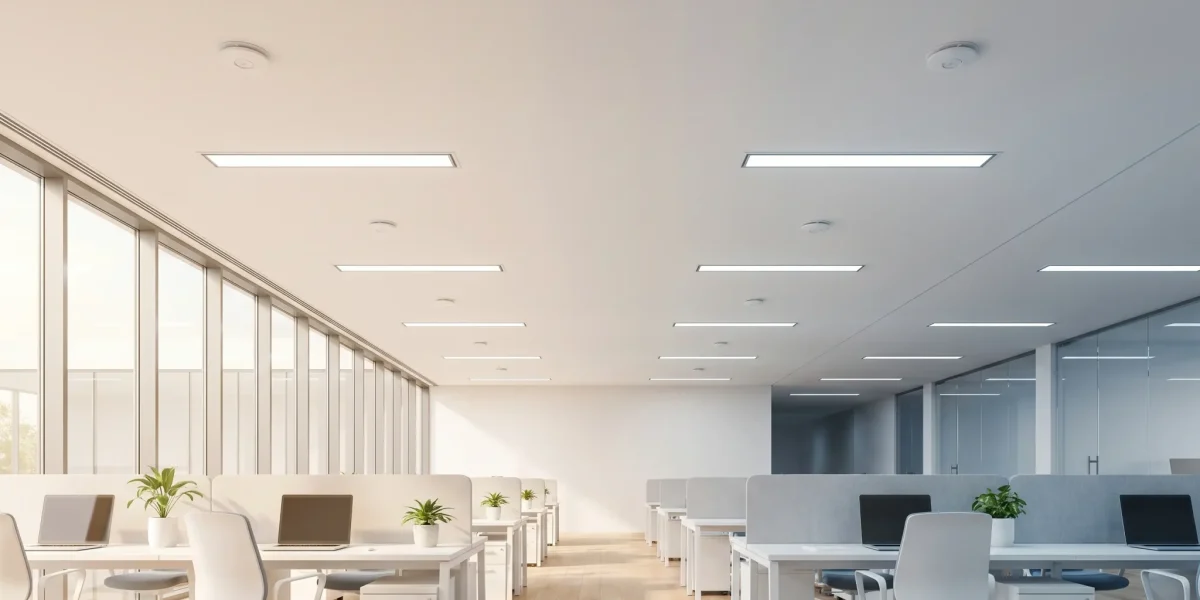
Americans spend an estimated 90% of their time indoors, where artificial lighting can account for up to 40% of energy consumption in commercial buildings. One company, Lutron, has developed a solution to simplify lighting management: Lutron Vive Wireless Controls.
Smart Lighting for Commercial Properties
Commercial real estate is no longer just about brick and mortar. Building owners and operators are now thinking about how lighting can impact their bottom line and reputation. Lutron Vive Wireless Controls addresses this shift by providing a seamless, easy-to-use system for managing lighting in large spaces.
The system utilizes a wireless protocol to connect with Lutron’s range of smart light dimmers and sensors, streamlining the process of installing and maintaining complex lighting systems. This integration enables building managers to easily schedule lighting scenes, set energy-saving goals, and monitor performance in real-time.
Lutron Vive Wireless Controls can be integrated with various Lutron lighting control devices, including its RA2 Select and Quantum systems. This flexibility allows for greater customizability, meeting the diverse needs of commercial properties.
Potential for Energy Savings
The true power of Lutron Vive Wireless Controls lies in its ability to optimize energy consumption. With the system’s advanced sensors and scheduling capabilities, building managers can fine-tune lighting to match occupancy and natural light availability, reducing the amount of energy required to power lighting systems.
What this means: Building owners and operators can not only reduce their environmental impact but also save on utilities, making it easier to meet sustainability goals and budgets. By leveraging smart lighting management, businesses can create a more comfortable, productive space while minimizing their carbon footprint.
Adoption and Expansion
Commercial property owners and operators are increasingly turning to advanced technologies like Lutron Vive Wireless Controls to enhance their spaces. As utility rates continue to rise and sustainability goals become more stringent, we can expect to see widespread adoption and expansion of smart lighting systems.
This trend has far-reaching implications for the built environment. In the future, we can expect to see even more sophisticated smart lighting systems that integrate with other building technologies to create seamless, efficient spaces.