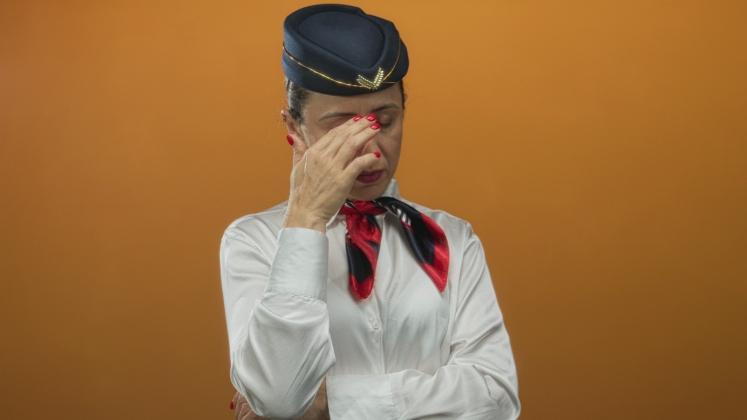
A study of British cabin crew has revealed a staggering link between their precarious work arrangements and rising burnout levels. Researchers found that the constant disruption to the aviation industry – driven by economic and political factors – has left many cabin crew struggling to manage their workloads.
The Precarious Lives of Cabin Crew
According to the study, conducted by **Stephanie Preston**, **Stephen Teo**, **John Blenkinsopp**, and **Clare Cook**, cabin crew are facing unsustainable work patterns. This is largely due to the ever-changing landscape of the aviation industry, which has seen a significant increase in flight cancellations and changes in recent years.
The researchers spoke to over 100 cabin crew members, who reported experiencing high levels of stress and anxiety. Many felt that they were being pushed to their limits, with inadequate staffing and scheduling leading to burnout. One cabin crew member commented, ‘I’m constantly on call, never knowing when I’ll be working or when I’ll have time off.’
What This Means for Cabin Crew and Air Travelers
The study highlights a pressing issue for the aviation industry, where burnout and exhaustion could have serious consequences for both crew and passengers. Burnout leads to mistakes, which can compromise air safety. What’s more, it also affects crew’s ability to provide excellent customer service, further impacting the overall travel experience.
**Stephanie Preston**, lead researcher on the study, warns that unless something is done to address the root causes of burnout, the aviation industry is at risk of losing talented crew members. ‘We need to prioritize the well-being of cabin crew and recognize the value they bring to air travel,’ she says.
The Need for Better Working Conditions
The study emphasizes the need for better working conditions, including more stable scheduling and increased staffing. This would not only improve crew well-being but also enhance air safety and customer satisfaction. Airlines must take responsibility for the working conditions of their cabin crew, ensuring that they are able to provide a safe and enjoyable travel experience.
The study’s findings should serve as a wake-up call for the aviation industry. It’s high time for airlines to prioritize the welfare of their cabin crew, recognizing that their well-being is intimately linked to the safety and success of air travel.