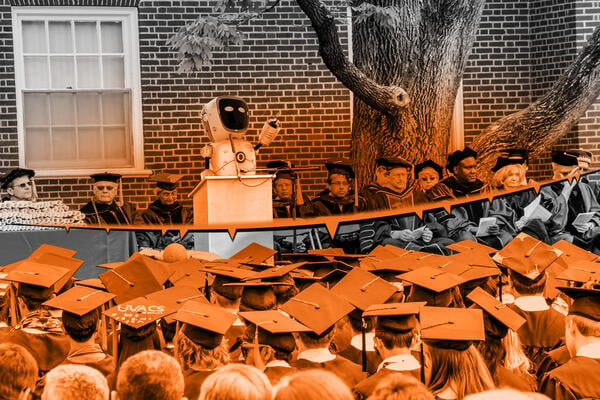
Specter of AI Haunts Class of 2026
As AI-powered tools become ubiquitous in daily life, the latest college graduates are grappling with a stark reality: their future may not be as secure as they thought. Kathryn Palmer, a prominent AI researcher, observed this simmering anxiety firsthand at commencement ceremonies this year.
Palmer, who has studied the impact of AI on job markets, says that the Class of 2026 is facing a unique set of challenges. “For the first time, we’re seeing a generation of students whose entire educational experience has been shaped by AI,” she said. This means that they’ve grown up with AI-powered tools, but now, as they enter the workforce, they’re facing the harsh reality that many of those tools are replacing human jobs.
The University of California, Berkeley, was one of the hotspots for student anxiety, where commencement speakers and faculty members were met with protests and heated discussions about AI’s role in the job market. At the University of Michigan, a petition signed by over 3,000 students called on the university to address the impact of AI on employment and education.
AI-Powered Tools: A Double-Edged Sword
While AI tools have streamlined many tasks and improved productivity, they’ve also created new worries about job security and displacement. For instance, ChatGPT, a popular AI chatbot, has become ubiquitous in education, helping students with research and writing tasks. However, this same tool has also led to concerns that it may be replacing human teachers and researchers. Similarly, AI-powered virtual assistants have improved customer service, but have also reduced the need for human customer support roles.
What This Means
This anxiety is not just about the future of work; it’s also about the erosion of human skills and the value of human expertise. As AI assumes more responsibilities, it’s essential for the Class of 2026 to develop skills that complement AI, rather than simply competing with it. This may involve learning creative problem-solving, critical thinking, and empathy – skills that are uniquely human and still highly valued in the job market.
The Class of 2026 is facing a crossroads, where they must navigate the benefits and risks of AI-powered tools. As they enter the workforce, they’ll need to be adaptable, resilient, and open to new opportunities. With the right skills and mindset, they can thrive in an AI-driven world, but it’s essential that educators, policymakers, and industry leaders prioritize their needs and concerns.