
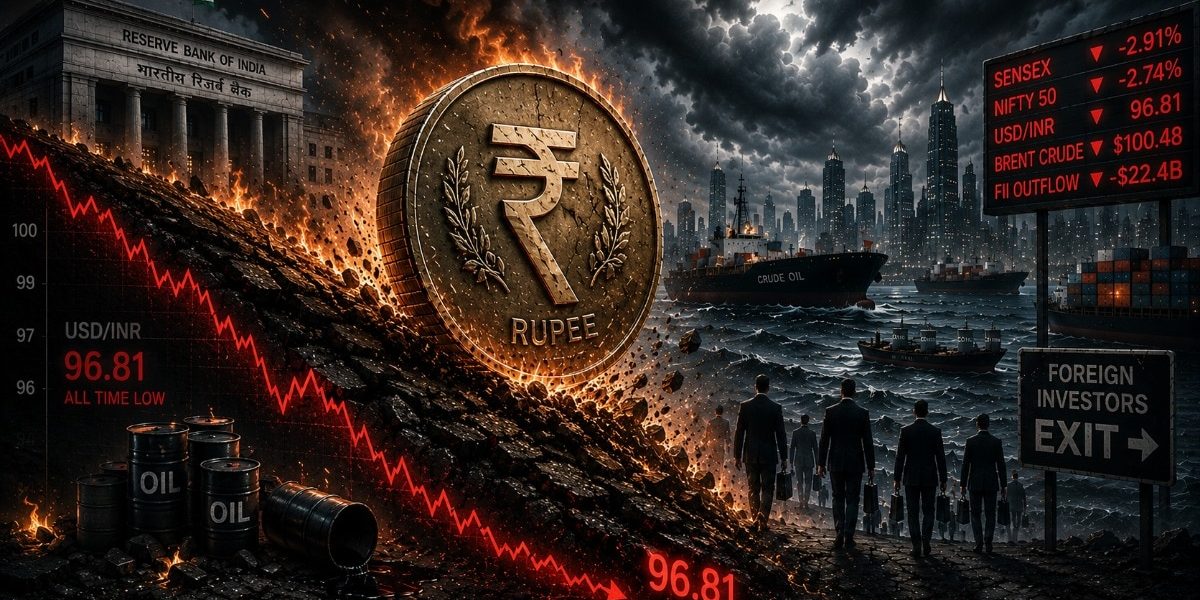
The Indian rupee just hit a 2-year low, dropping to 82.04 to the US dollar.
Why the rupee is falling
The rupee’s decline is largely due to external factors. India’s trade deficit, a result of high oil prices and a strong US dollar, is making it difficult for the country to import goods. This is causing investors to pull out their money, which in turn is weakening the rupee.
But what does this mean for India’s economy?
The Reserve Bank of India (RBI) currently has sufficient foreign exchange reserves, estimated to be around $540 billion, to support the rupee. So, it’s not like the rupee needs help staying up. However, the ongoing decline might indicate a bigger issue – a lack of investment in India. The country’s economic growth has been slowing down, which could be deterring foreign investors. This, in turn, is affecting the rupee’s value.
What does this mean for you?
The falling rupee might make imports more expensive, leading to higher prices for consumers. However, the RBI has the necessary resources to mitigate this impact. For now, it’s business as usual. But the root cause of the rupee’s decline – India’s sluggish economic growth and lack of investment – needs to be addressed to prevent further currency fluctuations.
The RBI’s monetary policy is expected to address these concerns soon. Until then, the rupee’s trajectory remains a topic of discussion. One thing is clear: the value of the rupee will continue to be shaped by India’s economic performance and investor sentiment.


