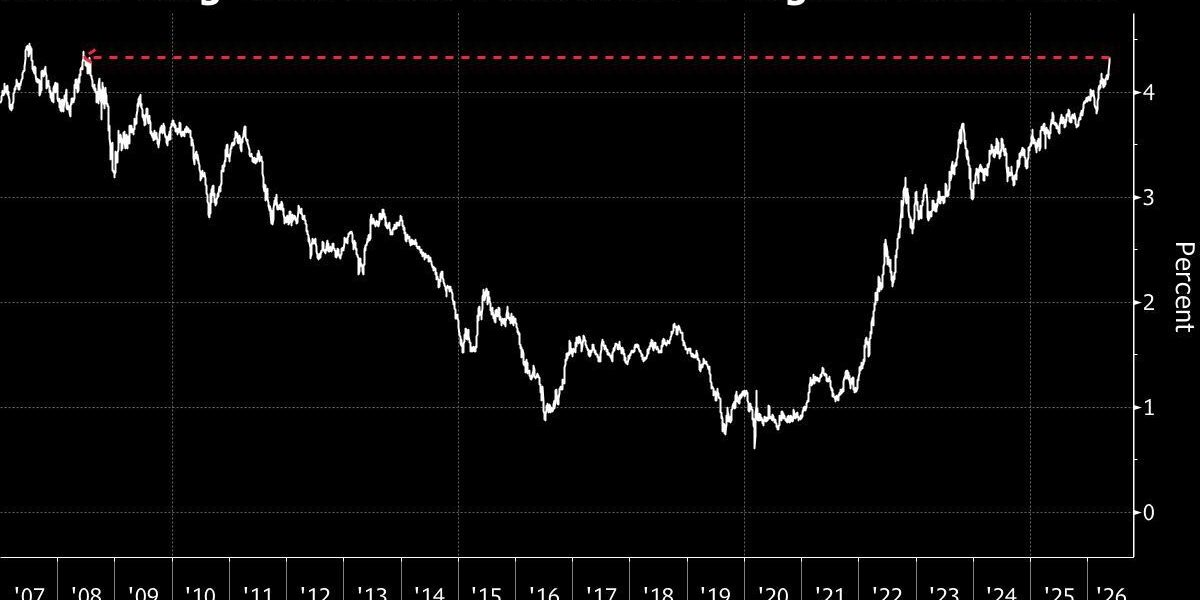
**Global Long Bond Yields Soar to Nearly Two-Decade High**
The global long bond market has taken a beating, with yields climbing to their highest levels in almost two decades, a stark reminder of the tumultuous times we’re living in. The 30-year US Treasury bond yield, a popular benchmark, has just breached the 5.5% mark, a threshold it hasn’t seen since the height of the global financial crisis in 2008.
Strategists are warning that the losses in long bonds have yet to fully materialize, and that investors face potentially significant additional losses in the near term. The selloff in longer-maturity government bonds has been fueled by a combination of factors, including a surge in inflation, rising interest rates, and a strengthening economy.
What’s Behind the Selloff
The Federal Reserve’s decision to raise interest rates has had a ripple effect on the global bond market. As interest rates rise, the value of existing bonds with lower interest rates (or yields) falls. This is because those bonds now appear less attractive compared to newly issued bonds with higher yields. The resulting surge in yields has been particularly pronounced in longer-maturity bonds, which are especially sensitive to changes in interest rates.
The Impact on Investors
The selloff in long bonds has significant implications for investors. Those who hold long bonds may see their portfolios take a hit as yields continue to rise. Fixed-income investors, such as pension funds and insurance companies, rely heavily on bonds to generate steady returns. As yields rise, these investors may see their returns decline, potentially impacting their ability to meet obligations and pay benefits.
What This Means
For individual investors, this means it’s time to reassess their portfolios and consider rebalancing their bond allocations to mitigate potential losses. It may also be wise to diversify into other asset classes, such as equities or alternative investments, to reduce exposure to the bond market. As yields continue to fluctuate, investors will need to stay nimble and adapt their strategies to navigate the changing market landscape.