The Chinese government has announced plans to increase its reliance on solar and wind power, aiming to drive down carbon emissions and meet ambitious renewable energy targets.
Boosting Renewable Energy with AI
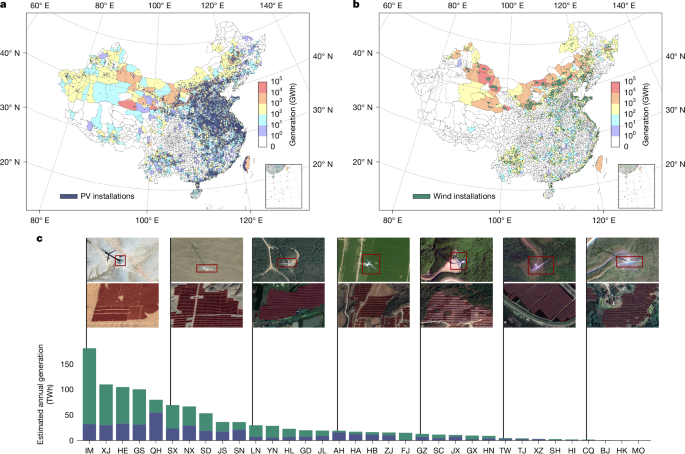
Researchers, led by Dr. Chris Grams, have developed a novel approach to optimize solar and wind energy production in China. By combining high-resolution satellite imagery with a deep-learning-based framework, they’ve built a national energy inventory that enables a data-driven assessment of solar-wind complementarity strategies.
The strategy, which relies on analyzing the spatial distribution of solar and wind farms, takes into account factors such as weather patterns and regional demand. By identifying areas with complementary energy production profiles, the researchers have been able to develop targeted plans to reduce power variability and enhance overall renewable energy output.
Enhancing Renewable Energy Output
The study, which builds on previous research into European wind power deployment, suggests that a more systematic approach to energy planning can make a significant difference in the efficiency and reliability of renewable energy systems.
The researchers found that by carefully balancing the spatial distribution of solar and wind farms, they could reduce power variability by up to 30% and increase overall energy output by up to 20%. This, in turn, could help China meet its ambitious renewable energy targets and reduce greenhouse gas emissions.
What this means
The implications of this research are significant. By adopting a more data-driven approach to energy planning, governments and energy companies can identify opportunities to optimize renewable energy production and reduce the variability of power output. This could make renewable energy sources more reliable and cost-effective, paving the way for a cleaner, more sustainable energy future.
As the world continues to grapple with the challenges of climate change, innovative approaches like this one will be crucial in driving down emissions and meeting renewable energy targets. By harnessing the power of AI and data analytics, we can create a more sustainable energy system that works for everyone.