Wuthering Heights: A Fiery yet Flawed Adaptation
Emily Brontë’s classic novel, Wuthering Heights, has been adapted countless times for the screen, but the latest version, written and directed by Emerald Fennell, is a decidedly unique take. This extravagant new movie is a testament to Fennell’s bold and unapologetic style, but it ultimately falls short in capturing the true emotional essence of the story.
A Reductive yet Visually Stunning Adaptation
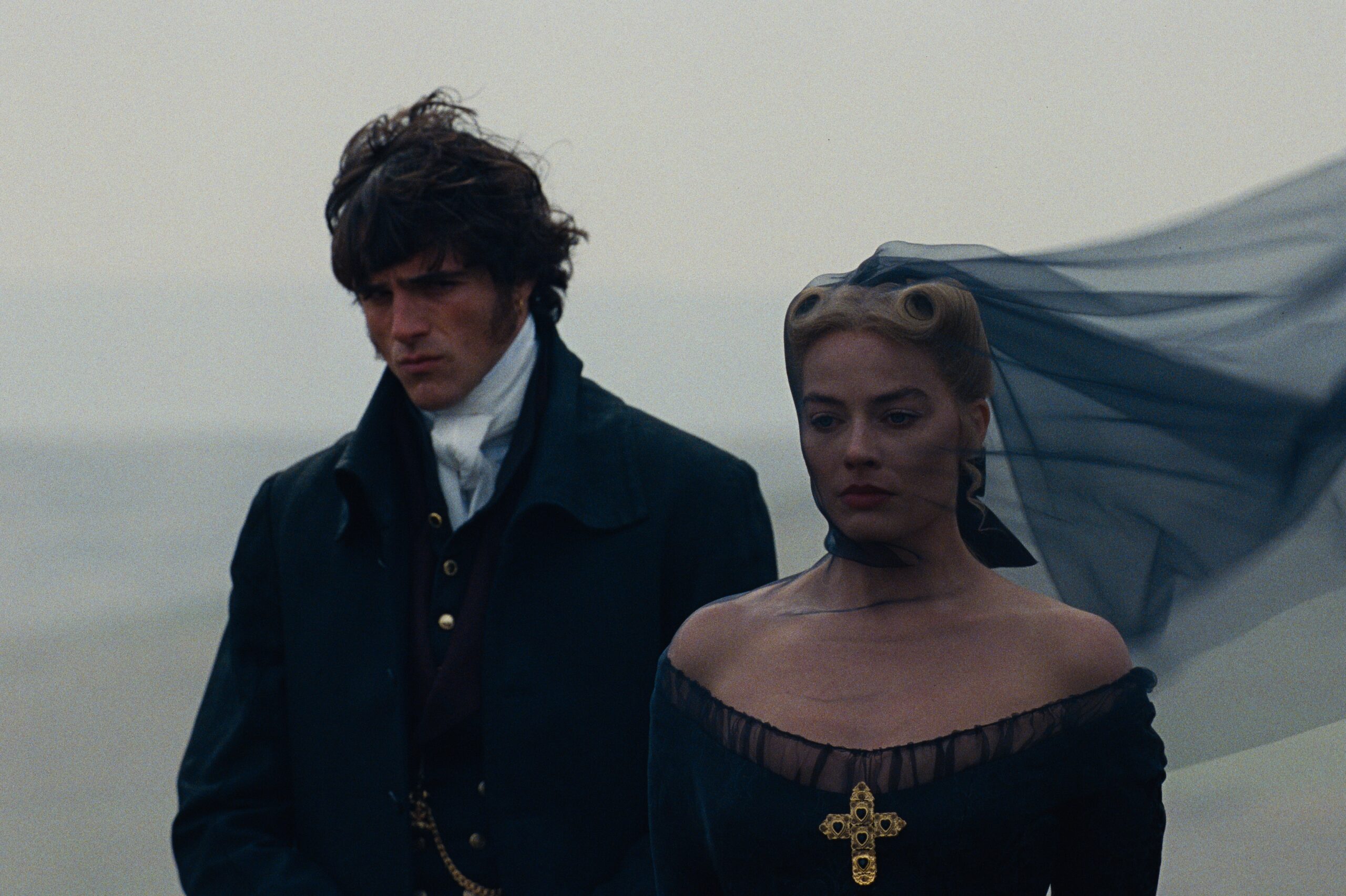
Fennell’s Wuthering Heights is a far cry from the subtle and nuanced approach often taken with Brontë’s work. Instead, she opts for a loud, flashy, and unapologetically excessive style, akin to spraying the screen with bright red paint. The film’s vibrant color palette, outrageous costumes, and anachronistic soundtrack, featuring Charli xcx, are all deliberate choices meant to convey the intense passion and all-consuming love between Catherine and Heathcliff.
Cast and Chemistry
Margot Robbie and Jacob Elordi shine as the star-crossed lovers, bringing a palpable energy to their performances. However, their chemistry, while undeniable, is often overshadowed by the film’s overwhelming excess. The supporting cast, including Shazad Latif and Alison Oliver, deliver solid performances, but it’s Oliver who steals the show with her sharp and memorable portrayal of Isabella.
Emotional Resonance and Anachronism
Despite Fennell’s bold intentions, the film’s emotional core is often lost amidst the chaos. The anachronistic elements, while meant to emphasize the timelessness of Catherine and Heathcliff’s love, sometimes feel forced and detract from the overall impact. The production design and costumes, while visually stunning, occasionally resemble a Met Gala runway rather than 18th-century Yorkshire.
A Missed Opportunity for Representation
The film’s treatment of Heathcliff’s ethnicity is a notable misstep. Despite efforts to acknowledge the character’s complex and multifaceted identity, the casting of Jacob Elordi perpetuates a long-standing trend of whitewashing the role. This omission is particularly notable, given the opportunity to explore the nuances of Heathcliff’s character and the historical context of the time.
A Comparison to Previous Adaptations
Andrea Arnold’s 2012 adaptation, featuring Solomon Glave and James Howson as the younger and older Heathcliff, is a stark contrast to Fennell’s version. Arnold’s somber, realistic approach may not have been as flashy, but it was ultimately more affecting and true to the spirit of Brontë’s novel.
In conclusion, while Fennell’s Wuthering Heights is a visually stunning and unapologetically bold adaptation, it falls short in capturing the emotional depth and complexity of the original novel. As the latest iteration in a long line of adaptations, it is a reminder that the true power of Brontë’s work lies in its ability to transcend time and convention, and that some stories are best told with subtlety and restraint.