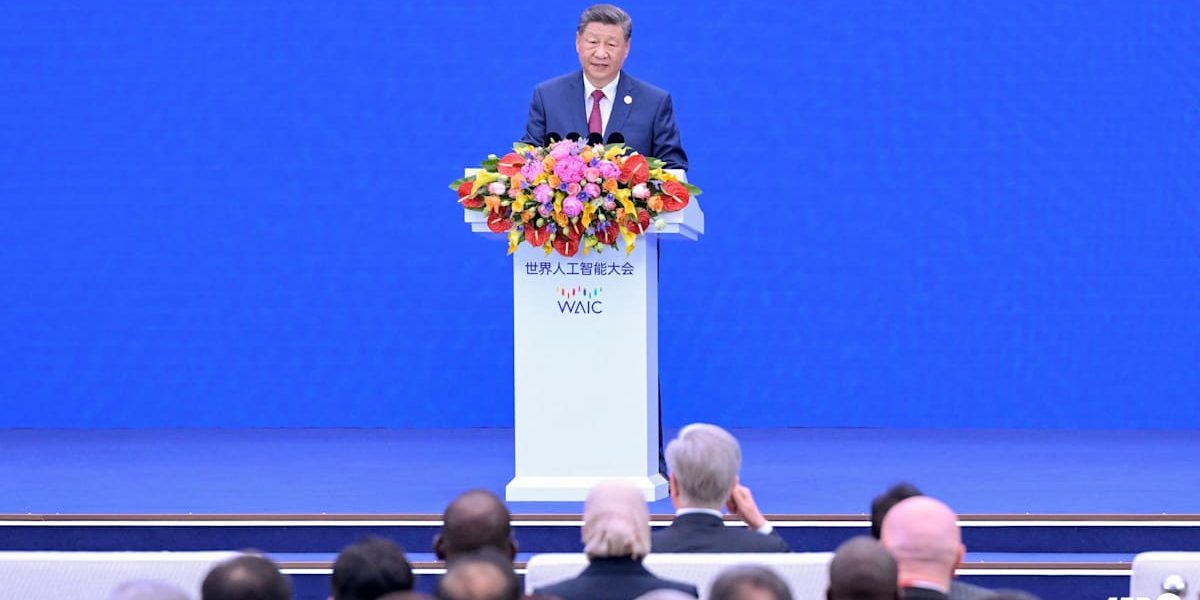
Chinese President Xi Jinping recently issued a stark warning about the dangers of AI, labeling it a “new historical injustice.” The statement is a continuation of a long-standing narrative within China about the costs of falling behind in previous technological revolutions, according to analysts.
A Legacy of Falling Behind
For Xi, the issue is about China’s past experience with industrialization and the economic consequences that followed when the country failed to adapt. The Chinese government has long been aware of the potential risks of losing out in technological advancements. However, with AI gaining momentum, the stakes are much higher.
WAICO and Global Cooperation
In a seeming contradiction, the day before Xi’s speech, China launched the World Artificial Intelligence Cooperation Organization (WAICO) in Shanghai, comprising 29 member countries. State news agency Xinhua described WAICO as a platform for international cooperation on AI, with a focus on “peaceful uses” of technology. Some analysts see this move as a strategic attempt to reposition China as a leader in global AI governance.
What this means
The concept of “new historical injustice” is open to interpretation, but it indicates Xi’s recognition of the significant economic and social implications of AI. The term likely reflects worries about job displacement, widening wealth gaps, and the potential for AI to exacerbate existing social inequalities. If unaddressed, these issues could lead to social unrest and undermine China’s own economic growth.
The establishment of WAICO might be seen as a response to these concerns, but it remains to be seen whether this initiative will be enough to mitigate the risks of AI. The organization’s focus on cooperation suggests a desire to establish common standards for AI development, which could help prevent a new technological divide. For China, and the world at large, the next few years will be crucial in determining how AI is used and whether its benefits are shared equitably.