A Ukrainian Ground Robot Holds Its Ground Against Russian Assault for 6 Weeks
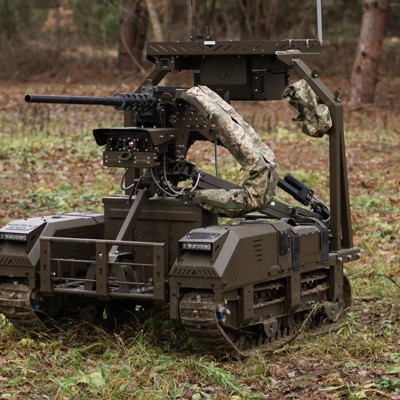
A remotely operated Ukrainian ground robot repelled repeated Russian attacks on a strategic intersection for two and a half months, a testament to the growing role of autonomous machines in modern warfare.
The robot, part of Ukraine’s rapidly expanding fleet of unmanned ground vehicles (UGVs), stood its ground against constant artillery bombardment and infantry assaults for 45 days last summer, according to a spokesperson from Ukraine’s 3rd Army Corps. This unyielding stance marked a significant shift in the Ukrainian military’s reliance on AI-powered machines to defend their territory.
The robot’s performance underscores the growing influence of AI in modern conflict. While the robot was operated remotely by a human, it was able to withstand relentless attacks, suggesting a potential future where autonomous machines assume more responsibility on the front lines.
The Ukrainian military has been aggressively adopting UGVs, with reports suggesting they’re beginning to replace human infantry in various roles. The deployment of these machines has been largely successful, allowing soldiers to focus on higher-level tasks while UGVs handle more mundane and often perilous jobs.
What this means: As Ukraine’s military continues to leverage UGVs, they’re likely to become a more integral part of future conflicts. This could lead to improved soldier safety and more effective use of resources, but also raises questions about the role of human soldiers in modern warfare.
Ukraine’s UGVs have been used for a variety of tasks, including reconnaissance, supply transport, and direct combat. The robot that defended the intersection was likely equipped with AI-powered systems that enabled it to detect and respond to threats in real-time.
The success of this robot will likely inspire other militaries to explore the potential of UGVs, potentially leading to a significant shift in the way modern warfare is approached. While the specifics of Ukraine’s UGVs remain classified, the fact that they’re being used to defend against Russian aggression speaks to their effectiveness.
The increasing reliance on AI in warfare will be a story worth watching in the coming years. As autonomous machines like these UGVs become more prevalent, they’ll likely redefine the landscape of modern conflict and raise important questions about the role of human soldiers in the process.