Ahead of a long-awaited economic cooperation agreement between Tokyo and Seoul, South Korean President Lee Jae-myung and Japanese Prime Minister Takaichi Sanae have strengthened their personal ties and mutual priorities, particularly when it comes to energy and economic security.
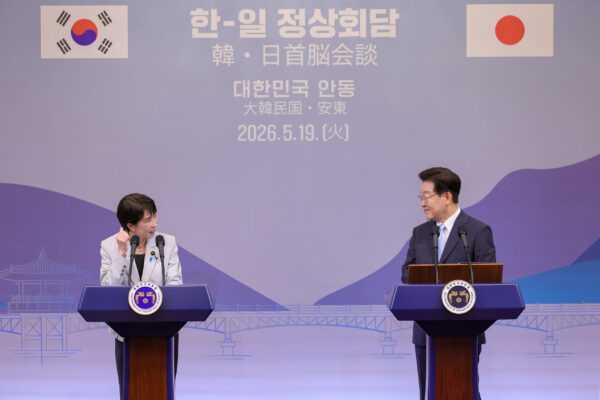
On May 19, Lee and Takaichi met in Andong, the South Korean President’s hometown, as part of their shuttle diplomacy, marking their fourth meeting in just six months. Their latest summit highlighted a notable shift in the geopolitics between Japan and South Korea, two countries that have been estranged for years over historical disputes and trade tensions.
Energy Security Takes Center Stage
As part of their efforts to strengthen bilateral ties, Lee and Takaichi have agreed to accelerate energy cooperation, including the sharing of liquefied natural gas (LNG) and nuclear energy technologies. This move is seen as a significant step towards reducing their reliance on imported fossil fuels and promoting sustainable development.
Japan, which is heavily dependent on imports to meet its energy needs, has been seeking to strengthen its energy security in the face of growing tensions with China over East Asian resources. South Korea, on the other hand, is aiming to reduce its reliance on imported fossil fuels and transition to cleaner energy sources.
What this means
The Japan-South Korea rapprochement has significant implications for the global energy landscape. As two of the world’s largest energy consumers, their cooperation on energy security could have a ripple effect on the global energy market, potentially leading to increased investment in renewable energy and reduced dependence on fossil fuels.
Furthermore, the agreement could also have broader geopolitical implications, as it may signal a shift in the balance of power in East Asia. A strengthened Japan-South Korea partnership could potentially counterbalance China’s growing influence in the region, potentially altering the dynamics of regional diplomacy.
Next Steps
The Lee-Takaichi summit marks a significant step forward in Japan-South Korea relations, but much work remains to be done. The two leaders have agreed to work towards the signing of a comprehensive economic cooperation agreement, which would require them to overcome several trade and security hurdles.
As the two countries move forward on their energy cooperation agenda, they will need to address several technical and regulatory challenges, including the sharing of sensitive energy technologies and the creation of a joint energy research and development program.