Elon Musk’s SpaceXAI Shakes Off AI Buildout Headaches, Sees Profit in Sight
SpaceXAI, the artificial intelligence arm of SpaceX, has managed to turn a corner in its financials, announcing a shift in its capital expenditures (capex) schedule that now projects profitability for Q4 2026 and 2027.
Depreciation, the AI Buildout’s Unseen Enemy
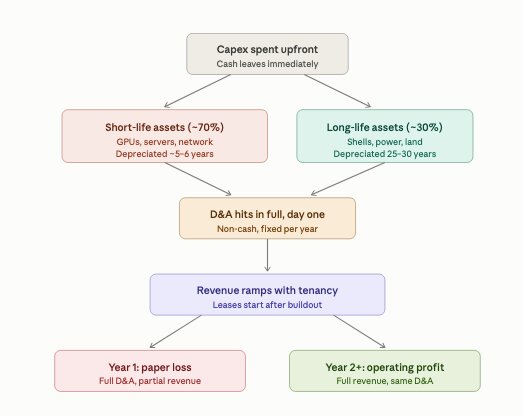
The key to this surprising turnaround lies in how SpaceXAI’s accounting team has tackled a problem that’s been plaguing other hyperscale companies: depreciation. For those who don’t know, depreciation is an accounting trick that helps companies write off the value of their hardware over time – but it has become a major pain point for companies investing heavily in AI. As tens of billions of dollars in AI spending are recorded as depreciation expenses, revenue growth hasn’t kept pace, leaving many struggling to maintain healthy profit margins.
SpaceXAI, however, has taken a different approach. By slowing down its capex spend and focusing on more efficient hardware designs, the company is able to spread the cost of depreciation over a longer period. This will likely result in a significant reduction in the drag caused by D&A (depreciation and amortization) on its income statement.
What this means: More Room to Invest in AI R&D
The financial implications of SpaceXAI’s move are substantial: as the company’s capex spend is compressed, its cash flow situation will improve, allowing it to invest more in research and development (R&D) for AI-related projects. This, in turn, should accelerate SpaceXAI’s progress in developing more sophisticated AI capabilities, including areas like natural language processing, computer vision, and reinforcement learning. As the company’s R&D investments bear fruit, its competitive position in the AI market is likely to strengthen.
Implications for the AI Industry
The news from SpaceXAI is also significant for the broader AI industry. If other hyperscalers follow SpaceXAI’s lead in managing their capex and depreciation expenses, it could lead to a shift in the narrative around AI buildouts. Instead of being seen as costly and unsustainable, AI investments might be viewed as more manageable and even profitable.