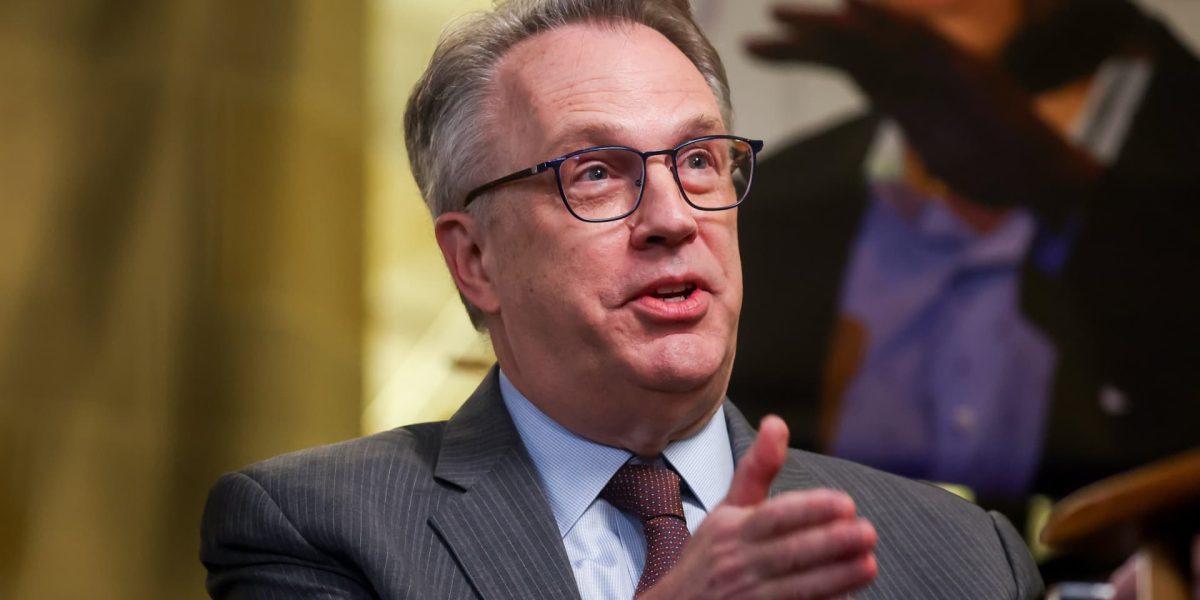
New York Federal Reserve President John Williams dropped a significant bombshell this week, stating that inflation has reached its peak, and interest rates are ‘well positioned’.
Five Key Indicators Point to Peaked Inflation
Williams cited five specific reasons why he believes the latest price surge has run its course: decreased demand for labor, moderating wage growth, softening commodity prices, slowing global demand, and a decline in price pressures from supply chain bottlenecks.
The Federal Reserve has been closely monitoring these factors, and according to Williams, they collectively suggest that inflation has reached a tipping point, with no significant upward pressure looming on the horizon.
A Sign of Confidence for the Fed?
Williams’ statement is significant because it suggests a level of confidence within the Federal Reserve that their monetary policy decisions are on the right track. This confidence could pave the way for further stability in interest rates.
The fact that inflation has peaked, in the eyes of the Federal Reserve, should bring a sense of relief to consumers, as it implies that prices won’t surge higher in the near future. However, it also raises questions about potential future interest rate hikes, which could impact consumer borrowing and spending.
What this means
For consumers, this news is a mixed bag: while the prospect of lower inflation is welcome, it also raises the stakes for interest rate decisions, which can have far-reaching implications for the economy. As the Federal Reserve continues to monitor the situation, it’s likely that interest rates will remain stable – but only time will tell if this is the right call.
The Federal Reserve’s ability to forecast and adapt to changing economic conditions will be crucial in determining the trajectory of interest rates and, ultimately, the health of the US economy. With this in mind, investors and consumers alike will be watching closely for any signs of inflation resurgence or interest rate shifts.