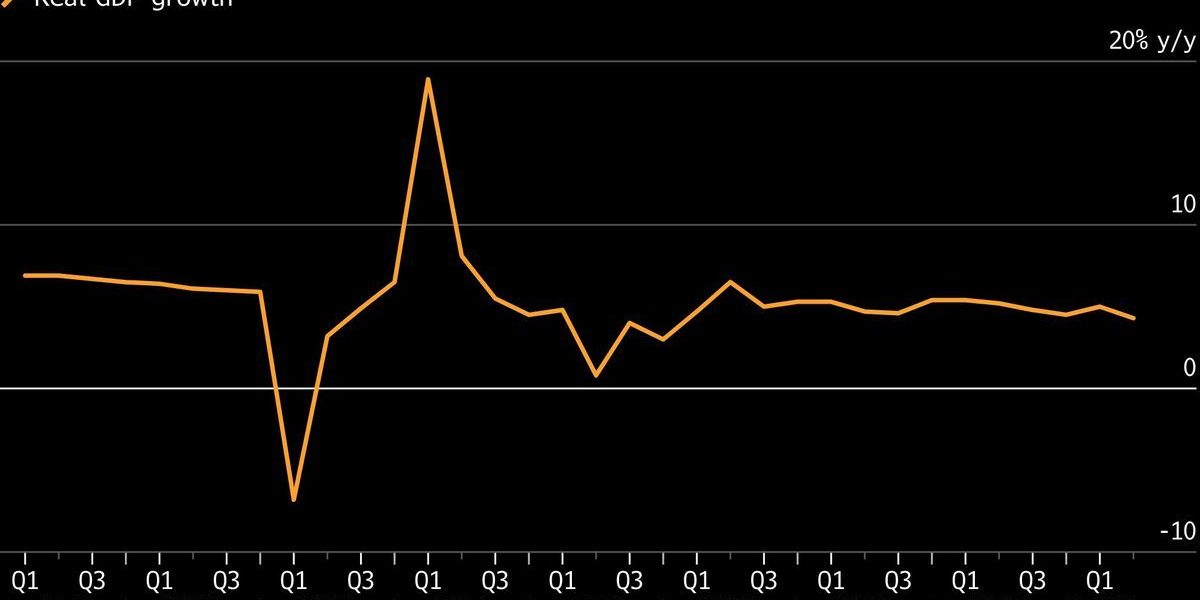
China’s economy contracted more than expected last quarter, hitting a three-year low and raising alarms among policymakers. National Bureau of Statistics data showed a 4.9% year-on-year growth rate, which is lower than the 5.5%-6.2% target range.
Public Spending in the Spotlight
The unexpected dip in GDP growth has put pressure on policymakers to accelerate public spending to meet their annual growth goal. With the economy slowing down, Beijing is likely to increase investments in key sectors such as infrastructure and technology.
Price Inflation Rebound
The GDP deflator, a broad measure of price changes in the economy, turned positive for the first time since early **2023**. However, this rebound is largely attributed to the rising costs of imported products, including oil, rather than a genuine increase in domestic production.
Economist Sun Guofeng notes that the country’s economic woes are largely driven by structural issues, such as a shrinking workforce and a decrease in government support for struggling businesses. “The current slowdown is a symptom of deeper problems within the economy,” he warns.
While the 4.9% growth rate may seem moderate at first glance, it has significant implications for China’s economic trajectory. If the country fails to meet its growth target, it could undermine the government’s credibility and lead to increased scrutiny from international investors.
What this means is that Beijing may be forced to loosen its monetary policy to stimulate economic growth, which could lead to a devaluation of the yuan and increased import prices for consumers. This development underscores the complexity of China’s economic landscape and the challenges policymakers face in reviving growth.