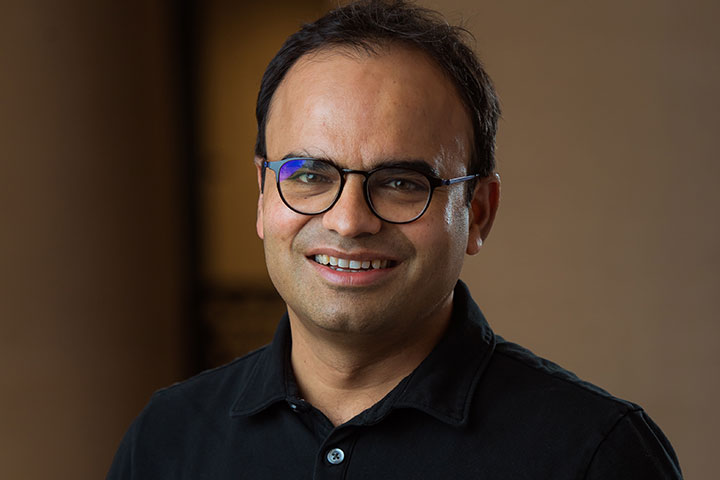
Professor Shah’s team at MIT is working on a solution: designing AI methods that can handle constant decision-making using limited computational resources. This is crucial for systems like those used in industries where real-time forecasting, planning, and decision-making are critical. Think manufacturing, logistics, or energy trading.
A key challenge AI systems face is known as the real-time decision-making problem. It’s not just about processing large amounts of data quickly, but also about making decisions on the fly based on incomplete or uncertain information.
This is where the concept of stochastic optimization comes in – a mathematical approach that takes into account the randomness and uncertainty of the data. Professor Shah’s team has developed a novel method called ‘Stochastic Alternating Direction Method of Multipliers’ (SADM), which can optimize complex decision-making problems more efficiently than existing methods.
This could have significant implications for businesses that need to make quick decisions based on real-time data. For example, in manufacturing, AI systems can quickly analyze production data and make adjustments to optimize output. In logistics, AI can analyze traffic patterns and optimize delivery routes in real-time.
Scaling up AI
Professor Shah’s work is part of a broader effort to scale up AI systems to meet the demands of complex, real-world applications. As AI becomes increasingly ubiquitous, the need for more efficient and effective methods of decision-making is growing.
What this means
For businesses, this means having access to more reliable and efficient AI systems that can make better decisions in real-time. It’s not just about processing large amounts of data quickly, but also about making decisions that are informed by that data.
Professor Shah’s work has the potential to make a significant impact on industries that rely heavily on real-time decision-making. As AI continues to transform the way businesses operate, it’s likely that we’ll see more applications of stochastic optimization and SADM in the years to come.