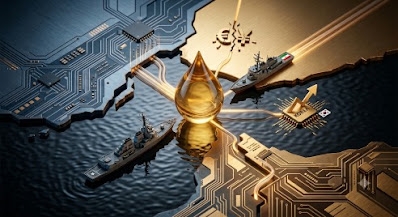
The Strait of Hormuz just got a whole lot more complicated – and it’s not just about oil prices anymore.
A recent shift in global geopolitics has brought AI algorithms to the center stage, as countries like the US, China, and Iran increasingly rely on them to analyze vast amounts of data and inform their military strategies.
AI-Powered Surveillance in the Strait
For years, the Strait of Hormuz has been a focal point for tensions between Iran and the US, with concerns over oil security and naval dominance driving a high-stakes game of cat and mouse. But with the rise of AI-powered surveillance, the stakes have been raised.
US naval vessels are now equipped with advanced AI systems that can analyze satellite imagery, radar data, and other feeds to detect potential threats in real-time. This has allowed the US to more effectively monitor the Strait and respond to Iranian provocations.
The Role of Chinese AI in the Region
Meanwhile, China has been quietly building its own AI capabilities in the region, with reports suggesting that Chinese warships are being equipped with AI-powered sensors that can detect and track Iranian submarines.
What this means is that the Strait of Hormuz is no longer just a physical chokepoint – it’s also a hub of high-stakes digital competition. As the US and China engage in a battle of wits, the risks of miscalculation and conflict are higher than ever.
The Future of Geopolitics
Make no mistake – this is not just about the Strait of Hormuz. The use of AI algorithms in military strategy is a harbinger of a new era of geopolitics, one in which data analysis and machine learning will play an increasingly central role.
As countries continue to develop their AI capabilities, the global security landscape will continue to shift and evolve. The question is – who will come out on top, and what will be the consequences for the rest of us?