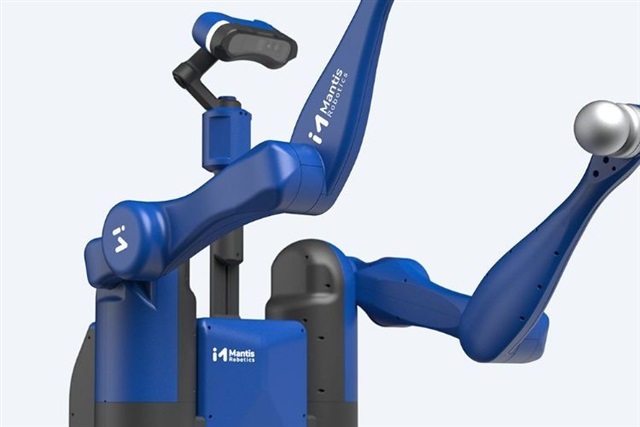
A US robotics startup, Mantis Robotics, backed by Agility Robotics, is gearing up to roll out its MR-X dual-arm industrial robot – and it’s targeting some of the most high-tech and high-demand spaces in the industry.
Next-Gen Production Assistant
The MR-X robot is designed to take on tasks in manufacturing, logistics, warehousing, and smart factories, essentially replacing human labor in these sectors. Mantis Robotics aims to equip its MR-X with advanced capabilities, including precision manipulation and adaptability, allowing the robot to navigate complex environments.
Agility Robotics’ backing provides Mantis Robotics with significant experience and expertise in robotics innovation, having already developed a range of robots that can safely interact with humans and navigate challenging environments.
What this means
The MR-X rollout is poised to have a significant impact on manufacturing processes, allowing for increased efficiency and productivity. As this technology gains traction, industries will need to adapt their workflows to accommodate these new tools. Companies will also need to invest in retraining their human workforce to optimize collaboration between robots and humans.
The rollout in 2027 will mark a significant milestone for Mantis Robotics and Agility Robotics, as they push the boundaries of industrial robotics. As the MR-X hits the market, we can expect to see more widespread adoption in sectors where human labor is currently dominant – and where efficiency and accuracy are paramount.
A New Era of Robot-Human Collaboration
While some have raised concerns about job displacement with the rise of automation, the MR-X robot is designed to work alongside human workers, enhancing productivity and safety. This development speaks to the evolving role of robotics in the workforce – one of augmentation, rather than replacement.
The MR-X’s capabilities will be closely watched, as the robotics industry continues to push the boundaries of innovation. As this technology gains traction, we can expect to see new standards for robot-human collaboration emerge, with significant implications for the future of work.