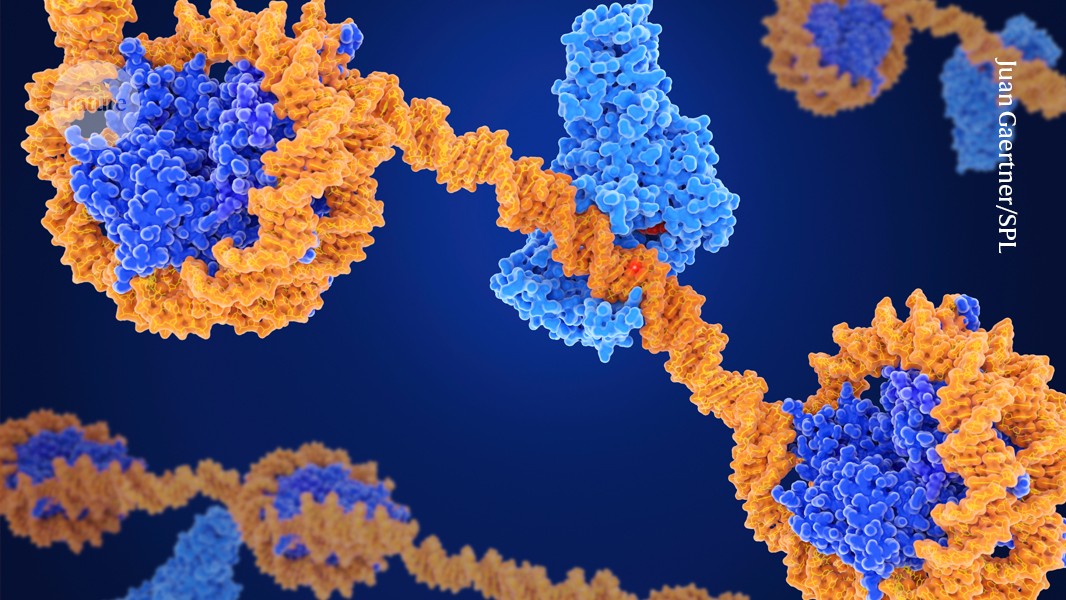
Scientists at the forefront of epigenetic editing have successfully rewritten the chemical tags on DNA and chromatin to fine-tune gene expression in living cells. Led by Marianne Rots and her team, this breakthrough marks a significant advancement in our understanding of epigenetic regulation.
Editing Epigenetic Codes
Epigenetic modifications to DNA – the chemical tags that don’t alter the underlying genetic code but influence how genes are expressed – can now be rewritten with unprecedented precision. The approach harnesses CRISPR-Cas9, a gene editing tool previously used to edit DNA sequences, to target and alter specific epigenetic marks on DNA.
The researchers have demonstrated the capability to add, remove, or modify epigenetic tags – such as DNA methylation and histone modifications – using CRISPR-Cas9 fused with a DNA methyltransferase or histone modification enzyme. This allows for the tuning of gene expression in response to specific biological signals or environmental cues.
Unpacking the Potential
One potential application of this technology lies in the treatment of genetic diseases where gene expression goes awry. By rewriting epigenetic codes, researchers may be able to restore normal gene expression, potentially offering new avenues for therapy.
This breakthrough also opens up possibilities for studying the complex interplay between epigenetic regulation and gene expression. As our understanding of epigenetics continues to evolve, so does its potential impact on various fields, including cancer research, developmental biology, and regenerative medicine.
What this means
Epigenetic editing has the potential to revolutionize our approach to genetic disease treatment, offering a new layer of precision in gene expression control. This innovation also underscores the intricate dance between our genetic code and the chemical tags that influence how genes are expressed – a fundamental aspect of life that can now be rewritten with unprecedented precision.