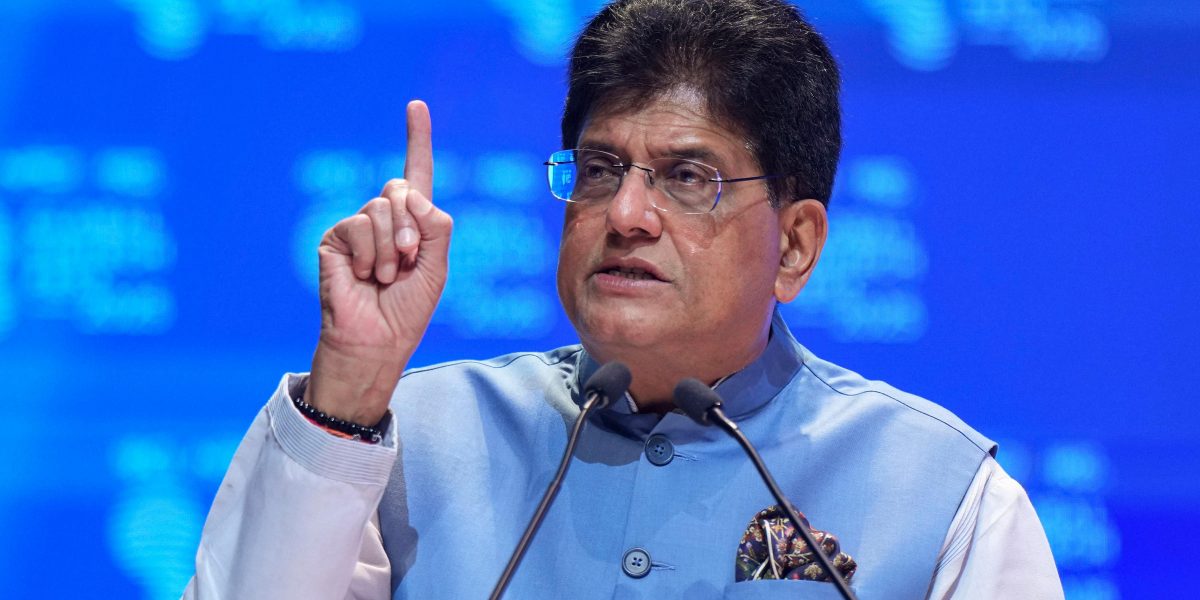
India’s Commerce & Industry Minister Piyush Goyal will head to Europe this week to lead a high-stakes trade delegation to the EU.
EU-India Trade Talks Enter Crucial Phase
The agenda is packed with topics that could significantly shape the future of India-EU trade: foreign direct investment opportunities, trade facilitation, sustainable technologies, and resilient supply chains. The India-EU Trade and Technology Council (TTC), to be hosted by Goyal, has been touted as a key platform to strengthen economic ties between the two giant trade blocks.
The visit comes at a time when global supply chains are facing immense pressure due to the Russia-Ukraine conflict and ongoing economic uncertainty. India, in particular, has been seeking to boost its trade and investment ties with the EU as part of its broader strategy to promote economic growth and competitiveness.
Foreign Direct Investment and Sustainable Technologies
Foreign direct investment (FDI) opportunities are high on the agenda, with India hoping to attract more European investors to the Indian market. The EU, on the other hand, is keen to tap into India’s growing market for sustainable technologies, including renewable energy, energy efficiency, and green infrastructure.
Goyal’s five-day visit to Spain, Belgium, and Finland will also provide an opportunity to discuss emerging technologies, such as artificial intelligence and cybersecurity, which have significant potential to drive economic growth and innovation in both regions.
What this means
The successful outcome of the India-EU TTC could pave the way for increased trade and investment flows between the two regions, creating new economic opportunities for businesses and workers in both India and the EU. For companies operating in the region, this could be a boost to their supply chains and access to new markets, making it an important development to watch in the coming weeks and months.
Goyal’s visit is seen as a key moment in the evolution of India-EU trade relations, and its outcome is likely to have significant implications for businesses, policymakers, and investors in both regions.