
Scientists Harness AI to Map Cellular Lineage and Uncover Developmental Secrets
Researchers have made a significant breakthrough in understanding cellular development and regeneration by employing AI-driven computational approaches for multimodal lineage tracing.
By developing a comprehensive framework for mapping cellular lineage, scientists have been able to link heritable ancestry with single-cell molecular states, revealing the intricate processes that determine cell fates during development, regeneration, and disease.
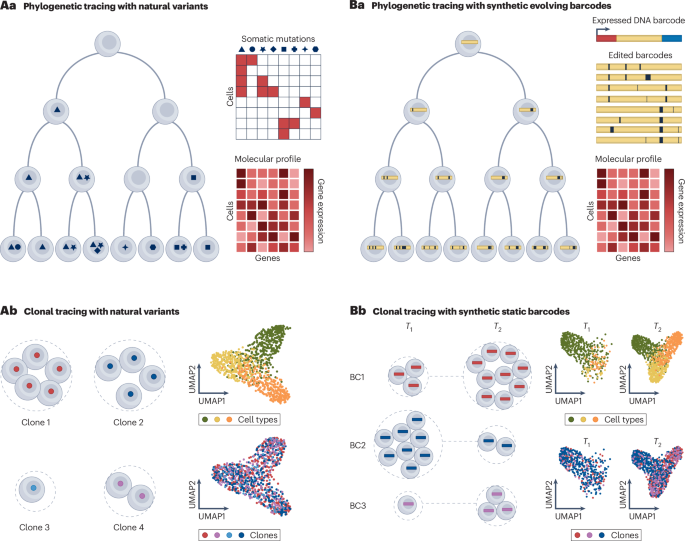
This Review, led by computational biologist Claude S. Baron and developmental biologist Anton van Oudenaarden, surveys the key computational challenges and methods for phylogenetic inference and lineage tracing, two essential components of cellular development.
According to the study, traditional methods for lineage tracing have limitations, especially when it comes to complex biological systems. To overcome these challenges, researchers have turned to AI-driven computational approaches that can analyze vast amounts of data and identify patterns that may not be immediately apparent to human researchers.
These computational methods, known as multimodal lineage tracing, combine data from various sources, including genetic information, gene expression, and spatial location, to create a detailed map of cellular lineage. By leveraging these approaches, scientists can gain a deeper understanding of how cell fates emerge and evolve during development, regeneration, and disease.
What this means: By applying AI-driven computational approaches to cellular lineage tracing, researchers can unlock the secrets of cellular development and regeneration, potentially leading to new insights into human diseases and the development of novel treatments.
The Future of Cellular Development
As the field continues to evolve, we can expect to see the integration of AI and machine learning into various areas of biology. The ability to map cellular lineage and understand the complex processes that govern development and regeneration has far-reaching implications for fields such as cancer research, regenerative medicine, and developmental biology.
By harnessing the power of AI, scientists can accelerate our understanding of the intricate mechanisms that govern life, ultimately leading to breakthroughs in human health and disease.