Michael Kendrick Architects Taps AI-Powered Design for Eco-Friendly Hideaway
A remote woodland lodge in East Sussex, England, has just been unveiled, featuring a design that seamlessly blends into its surroundings thanks to the input of artificial intelligence.
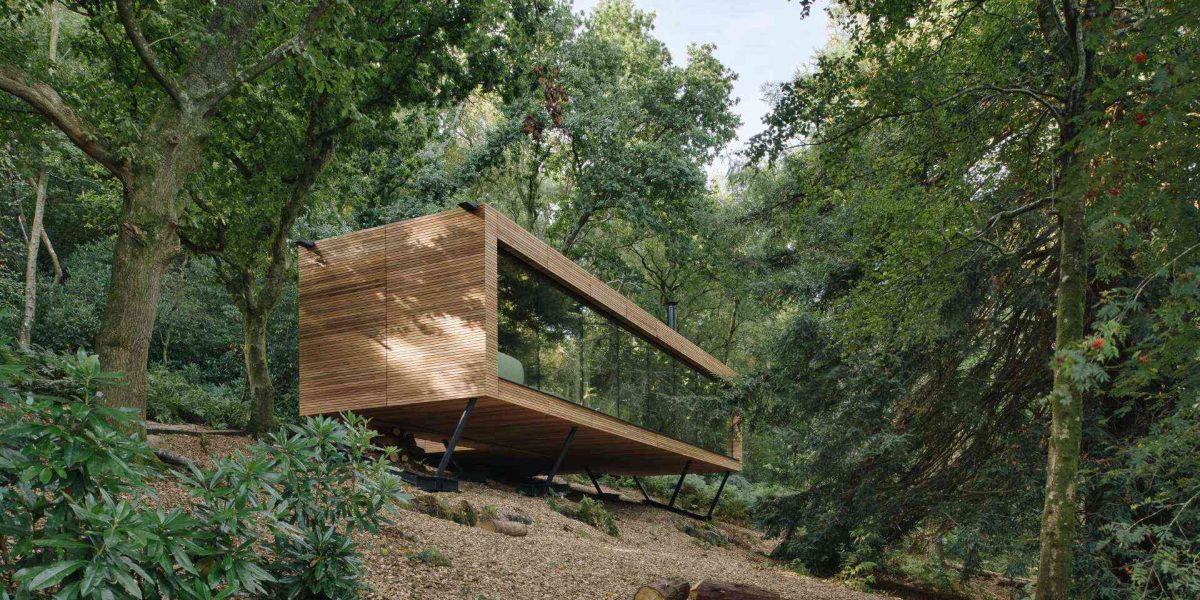
The Looking Glass Lodge, created by Michael Kendrick Architects, has been crafted to provide an immersive experience of the natural world, while protecting the sensitive ecosystem of the protected woodland. To achieve this, the team employed AI-powered tools to optimize the building’s form and materials.
The lodge’s curved façade, clad in western red cedar, appears to melt into the surroundings, minimizing its visual impact on the landscape. By using AI to refine the design, the architects were able to balance the need for a seamless integration with the woodland environment and the requirements for a functional and comfortable holiday home.
The use of AI in the design process allowed the architects to explore complex geometries and forms that might have been difficult or time-consuming to achieve through traditional methods. This not only enabled them to create a unique and striking visual appearance but also helped to reduce the lodge’s carbon footprint and environmental impact.
The Looking Glass Lodge is a testament to the potential of AI-powered design in creating innovative and sustainable buildings that harmonize with their surroundings. As the built environment continues to evolve, it’s clear that AI will play an increasingly important role in shaping the future of architecture.
What this means
The integration of AI in architecture has far-reaching implications for the built environment. As AI continues to drive innovation in design, we can expect to see more structures that not only minimize their ecological footprint but also enhance the user experience through intelligent and adaptive design.