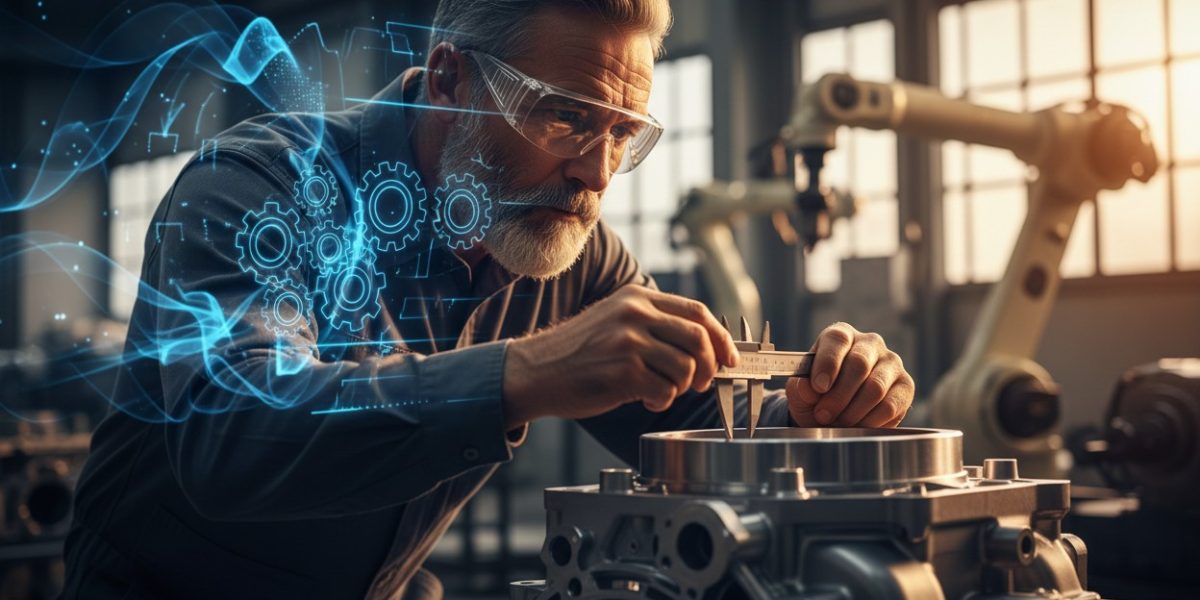
Ford Rehires Hundreds of Engineers After AI Quality Systems Fail to Deliver.
The automotive giant’s decision to revive human expertise was reportedly made after an AI-powered quality control system failed to meet Ford’s lofty expectations, leading to a return of veteran engineers to the fold.
These 350 rehired engineers, whose skills and experience were deemed essential to improving Ford’s quality standards, were initially replaced by AI systems aimed at reducing costs and increasing efficiency. Despite initial optimism, these AI-powered quality control systems struggled to detect defects and anomalies, a critical function that experienced engineers can perform with ease.
The Limits of AI in Quality Control
Ford’s experience highlights the limitations of relying solely on AI in complex tasks, even those that seem well-suited for automation. While AI excels at pattern recognition and predictive modeling, its ability to adapt to real-world situations and handle uncertainty can be lacking. In quality control, human engineers can often pick up on subtle defects or irregularities that AI systems might miss.
The fact that Ford’s AI systems failed to detect certain problems is a stark reminder that AI is not a silver bullet for all quality control challenges. What this means for manufacturers: AI is a useful tool, but it’s not a replacement for human expertise in critical areas like quality control.
What’s Next for Ford?
It’s unclear what role AI will play in Ford’s quality control systems going forward, but it’s clear that the company has learned a valuable lesson about the importance of combining human expertise with technological advancements. With the rehired engineers on board, Ford is likely to focus on fine-tuning its quality control processes to ensure a seamless blend of human judgment and AI-driven insights.
Ford’s experience serves as a cautionary tale for businesses looking to implement AI solutions, highlighting the need for a nuanced approach that acknowledges the limitations of artificial intelligence.