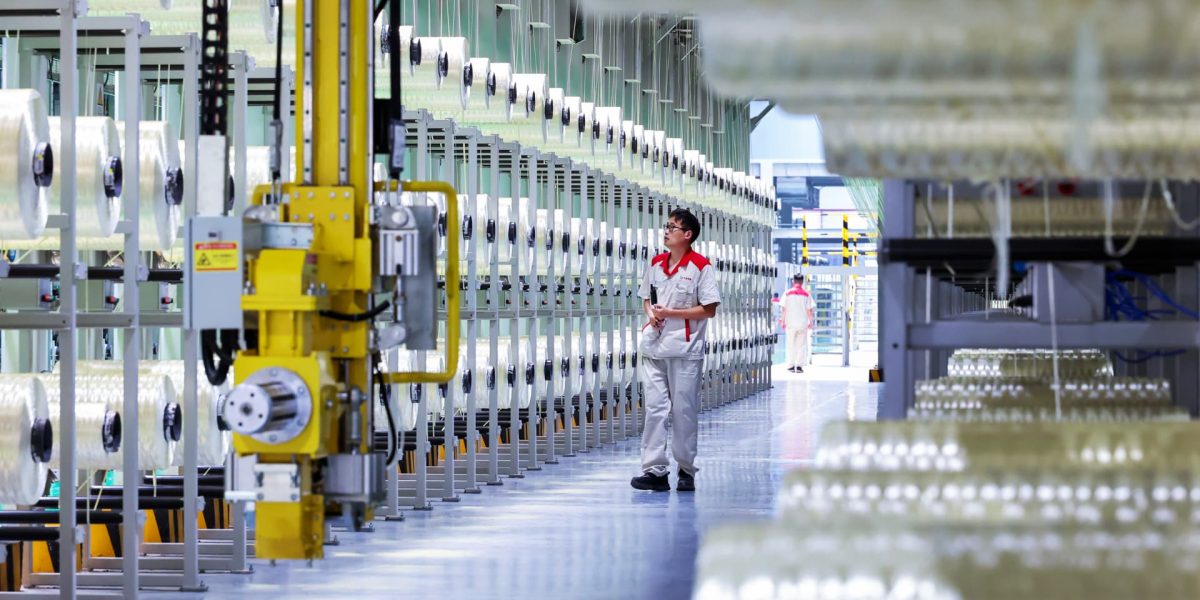
A 3.5 percentage point jump in China’s manufacturing activity in June has defied expectations, driven by soaring demand for high-tech exports.
The country’s official purchasing managers’ index (PMI) rose to 50.3 in June, surpassing forecasts and indicating a moderate expansion in factory output. This uptick is largely attributed to China’s increasing focus on high-tech industries, including artificial intelligence, semiconductors, and renewable energy.
China’s AI push pays off
As the global AI boom continues, China’s efforts to become a leading AI player are starting to bear fruit. The country has been investing heavily in AI research, talent development, and infrastructure, with a focus on creating a self-sustaining ecosystem.
This strategic push has paid off, with Chinese tech companies gaining significant market share in key AI sectors, particularly in areas such as natural language processing, computer vision, and robotics.
What this means
For the global economy, China’s growth in high-tech manufacturing is a welcome development. As demand for AI-powered products and services continues to rise, China’s increased production capacity will help satisfy this demand, potentially leading to improved supply chains and lower prices for consumers.
However, this trend also raises concerns about China’s growing influence in the AI landscape. As the country becomes increasingly dominant in key AI sectors, it may lead to concerns about data security, intellectual property, and the potential for Chinese AI systems to become entrenched in global supply chains.
A shift in global supply chains?
The implications of China’s manufacturing growth go beyond its own borders. As the country gains a stronger foothold in high-tech industries, it may lead to a shift in global supply chains, with more companies looking to diversify their production capacity and reduce reliance on Chinese manufacturers.
This, in turn, could create opportunities for other countries to establish themselves as leading producers of AI-powered products and services, potentially leading to a more decentralized and resilient global AI ecosystem.