Yuri Gagarin’s Record-Breaking Spaceflight Paved the Way for AI’s Most Uncertain Frontier: Human Trust in Machines
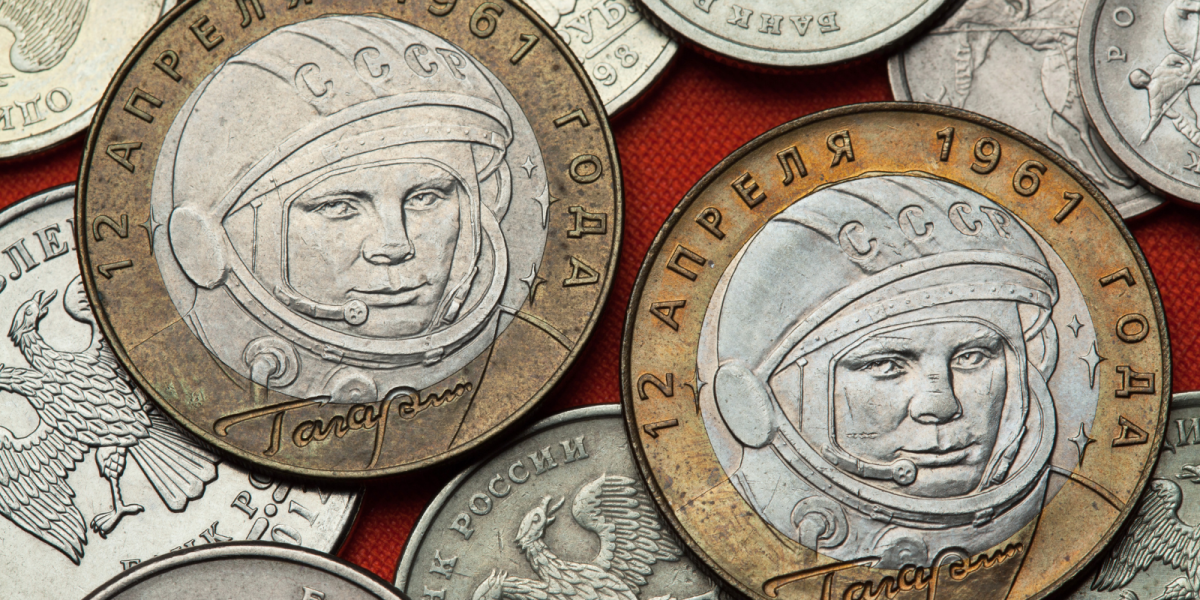
Yuri Gagarin, a 27-year-old Russian fighter pilot, boldly ventured into the unknown on 12 April 1961, becoming the first human to leave Earth in a tiny Vostok 1 spacecraft, just 2.1 meters wide. Gagarin had no control over the ship’s navigation and was instructed to open a sealed envelope only if he lost his mind during the 108 minutes of weightlessness. This historic mission not only marked the beginning of human spaceflight but also laid the groundwork for AI’s most daunting challenge: earning and maintaining human trust in machines.
A Space Race Driven by Fear and Ambition
The space race that led to Vostok 1 started in 1957 with the Soviet Union’s launch of Sputnik 1, the world’s first artificial satellite. This launch sent shockwaves through the scientific community and the Cold War era, prompting the United States to accelerate its space program. The space race was a high-stakes competition between two superpowers, with the Soviet Union pushing the boundaries of space exploration at an unprecedented pace.
A Lesson in Trusting the Unpredictable
Gagarin’s Vostok 1 mission was a masterclass in trusting the unpredictable. With no way to control the spacecraft, Gagarin’s fate rested entirely on the performance of the Soviet Union’s technological prowess. The sealed envelope served as a last-resort measure, a testament to the uncertainty surrounding human behavior in space. This pioneering experiment set the stage for the AI industry’s own existential question: can machines be trusted to make decisions that impact human lives?
What This Means
The success of Vostok 1 and the subsequent human spaceflight missions demonstrated that humans can adapt to the most extreme environments, but it also highlighted the importance of trust in technology. As AI continues to advance, we’re witnessing a similar shift in trust, where humans are increasingly relying on machines to make life-or-death decisions. The challenge for the AI industry is clear: to develop systems that can earn and maintain human trust, even in the face of uncertainty. The Vostok 1 mission serves as a poignant reminder that the most uncertain frontier of AI is not the technology itself, but the human heart that drives it.