Unlocking Invisible Colors
Researchers have discovered a way to map and visualize colors that are invisible to human eyes, but present in the natural world.
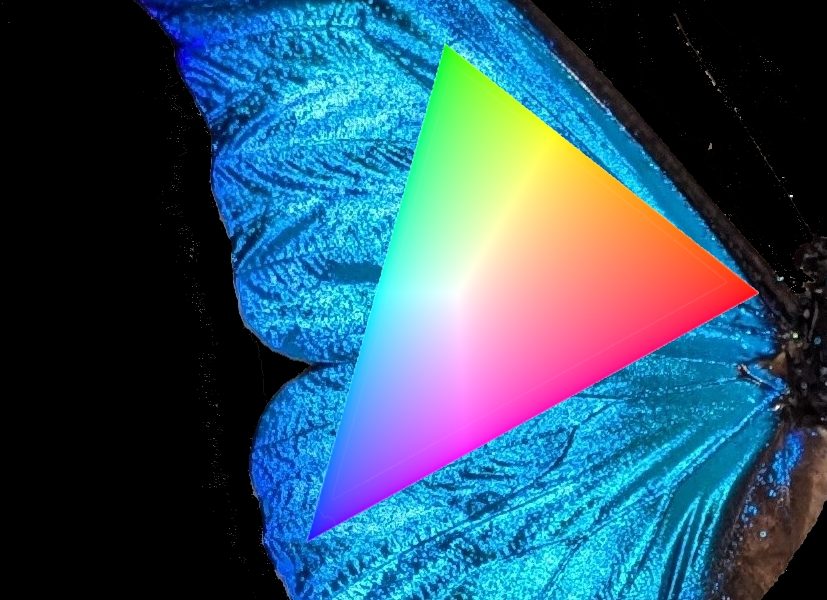
A team led by Ryan Moulton, an associate professor at the University of California, has developed a system to represent these hidden colors using images and colors we can see. They’ve created an atlas that lets us explore and interact with these vibrant colors, which are invisible to our eyes.
These invisible colors, dubbed “infraspecular highlights,” are caused by the way light interacts with tiny imperfections in surfaces. When light hits a surface, it can create a range of colors, from subtle shifts in hue to bold, vibrant tones. However, conventional digital photography can’t capture these colors because they don’t fit within the visible light spectrum.
Moulton’s team used a technique called “spectrum-aware rendering” to recreate these hidden colors in a way that makes them visible to us. This involves analyzing the way light interacts with surfaces and then using that information to create a digital representation of the hidden colors. The result is a visual representation of the real world that’s more nuanced and richly colored than what we see with our naked eyes.
The Limits of Human Vision
So, what does this mean for our understanding of the world around us? For one, it highlights the limitations of human vision. We think of our eyes as being the best tool for perceiving the world, but Moulton’s work shows that there’s a lot more to the world than what we can see.
The atlas created by Moulton’s team is a fascinating example of how technology can help us explore and understand the world in new ways. By visualizing the hidden colors of the natural world, we’re gaining a new appreciation for the complexity and richness of the world around us.
Unlocking New Possibilities
The potential applications of this work go beyond mere aesthetics. By understanding how light interacts with surfaces, we can develop new technologies that allow us to capture and display a wider range of colors, from more vivid and realistic images to new forms of artistic expression.
Say goodbye to dull, grayscale displays and hello to a world where colors pop and shine in a way that’s never been possible before. The possibilities are endless, and it’s all thanks to the work of researchers like Moulton who are pushing the boundaries of what we thought was possible.
What this means is that we’re on the cusp of a new era in color technology, one that will revolutionize the way we experience and interact with the world around us.