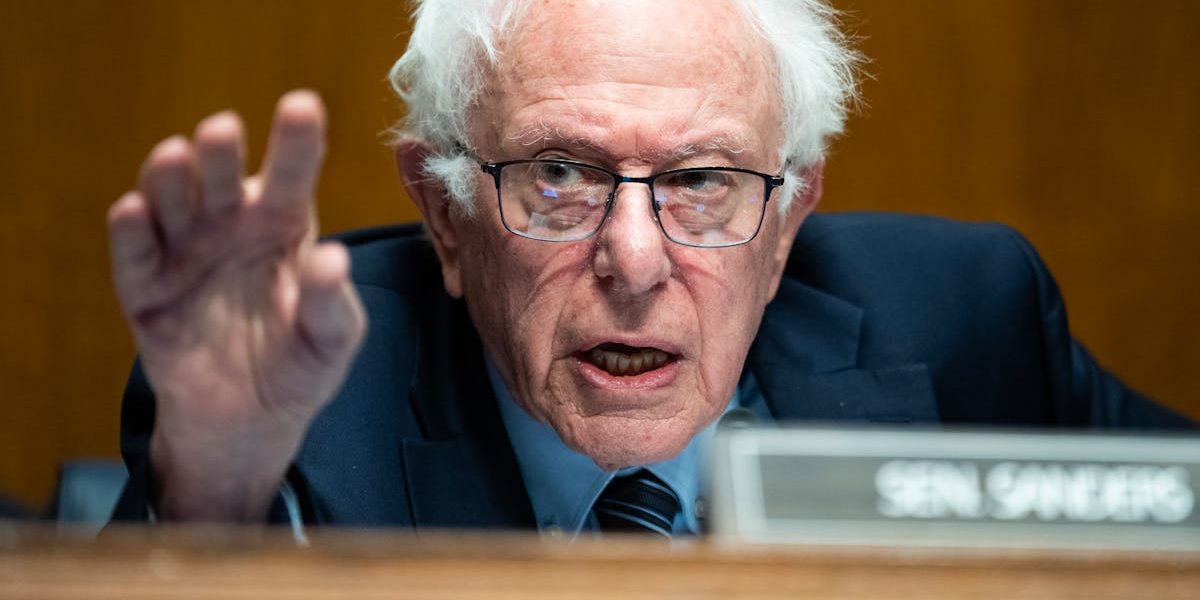
**Senator Bernie Sanders Proposes Public Ownership of AI Firms**
A one-time 50% tax on annual revenues of over $200 million could soon become a reality for leading AI companies under a new bill unveiled by Senator Bernie Sanders. The proposal aims to inject a significant chunk of cash from tech giants into public coffers, with the Vermont democratic socialist arguing that the American people should have a stake in these companies.
The bill, a response to the increasing dominance of AI in various sectors, seeks to fund initiatives that would safeguard the jobs, privacy rights, and mental health of Americans in the face of an AI-driven economy. Sanders emphasizes that AI and robotics have the potential to disrupt the lives of every individual in the country if left unchecked.
**A Response to the AI Threat**
According to Sanders, the tax would hit companies with an annual revenue of at least $200 million. This figure is roughly equivalent to the annual revenue of firms like Google’s AI subsidiary, DeepMind, or Microsoft’s AI-focused Azure platform. The funds raised would then be used to implement measures such as job retraining programs, mental health services, and privacy protection initiatives.
The senator’s move comes at a time when AI is increasingly transforming industries such as healthcare, finance, and transportation. While AI has the potential to drive significant economic growth and improve efficiency, it also poses significant risks, including job displacement, data breaches, and mental health concerns.
**What this means**
If passed, this bill would mark a significant shift in how AI companies are regulated and taxed, with a focus on the societal implications of their activities. It may also spur a broader debate about the role of the private sector in funding initiatives that benefit the public good. One thing is certain: the future of work, as mediated by AI, will require a more concerted effort from policymakers and tech leaders to ensure that the benefits of technological progress are shared fairly among all Americans.