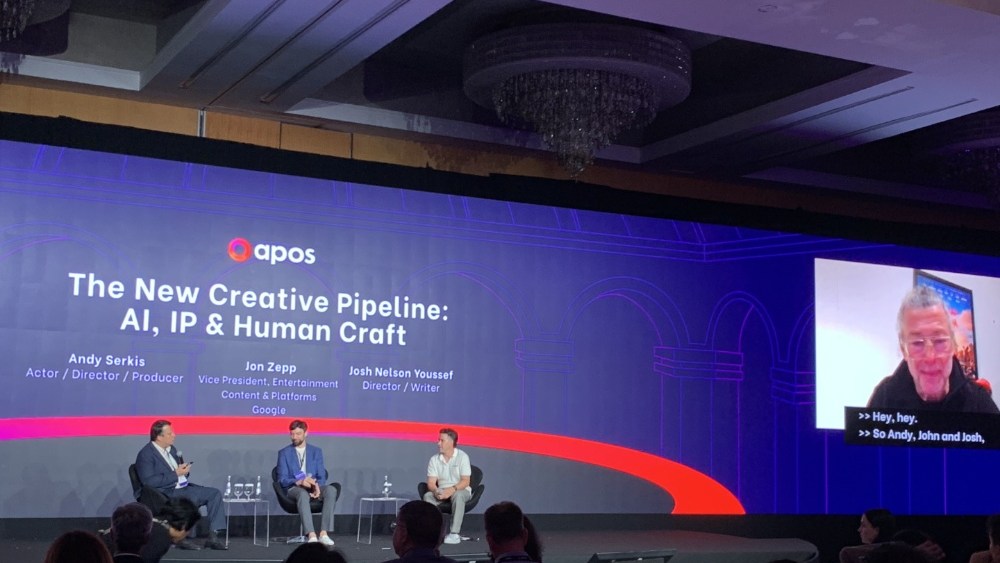
Andy Serkis, the acclaimed actor known for his roles in The Lord of the Rings and The Jungle Book, recently expressed concerns about the implications of AI on storytelling at the APOS conference’s “The New Creative Pipeline: AI, IP & Human Craft” session.
AI’s Role in Storytelling
Serkis, who has also ventured into directing and producing, emphasized the need for humans to adapt and take responsibility for their creative output in the face of AI-generated content. He believes that AI will not replace human creativity, but rather augment it, and that the world is changing fast, but human creativity will evolve alongside it.
Serkis highlighted the potential risks of relying too heavily on AI-generated content, such as the loss of authentic human experiences and emotions. He stated that while AI can be used to enhance certain aspects of storytelling, it should not replace human ingenuity and imagination.
“The Responsibility of Creativity”
Serkis emphasized the importance of human responsibility in the creative process, saying that AI should be used to augment, not replace, human creativity. He believes that humans must take ownership of their work and ensure that AI-generated content does not compromise the authenticity and emotional depth of storytelling.
Serkis’ comments echo the sentiments of many in the creative industry, who are grappling with the implications of AI on their work. While AI has the potential to revolutionize the way we create content, it also raises important questions about authorship, ownership, and the role of human creativity in the face of automation.
What this means
In practical terms, Serkis’ comments suggest that the creative industry will need to adapt to the changing landscape of AI-generated content. This may involve a greater emphasis on human-centered storytelling, where AI is used to enhance, rather than replace, human creativity. As AI continues to evolve, it will be up to creators like Serkis to ensure that human values and emotions remain at the heart of storytelling.