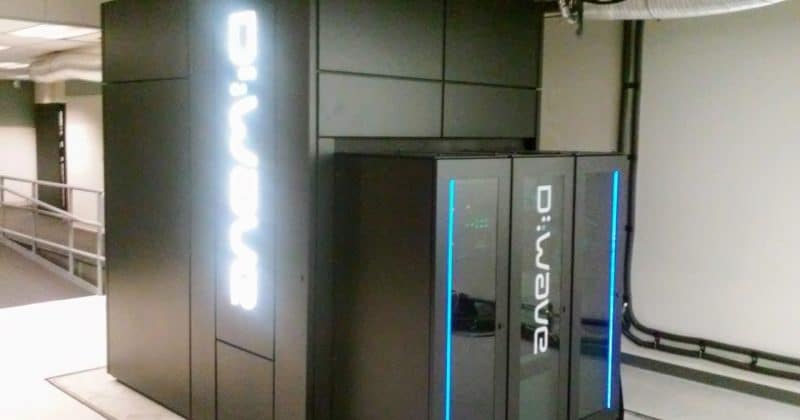
D-Wave’s Pivot to Gate-Model Computing Could Revolutionize Quantum Landscape
D-Wave Quantum, a leader in quantum computing, has unveiled a six-year roadmap to build fault-tolerant gate-model systems, a move that could profoundly impact the competitive dynamics of the tech industry.
The company, known for its quantum annealing approach, is now shifting focus to gate-model architecture, which is considered a more traditional and scalable path to universal quantum computing. This pivot could potentially disrupt the landscape of quantum computing, with D-Wave aiming to achieve 100 logical qubits by 2032.
What’s Driving D-Wave’s Gate-Model Experimentation?
D-Wave’s decision to experiment with gate-model architecture may seem counterintuitive, given its strengths in quantum annealing. However, the company has been quietly researching quantum blockchain consensus mechanisms and exploring new applications for its technology. This move could be a strategic play to expand its market presence and create new opportunities in the rapidly growing quantum computing space.
Implications for Tech Innovation and Crypto Security
The implications of D-Wave’s pivot to gate-model computing are far-reaching, with potential impacts on both tech innovation and crypto security landscapes. For one, gate-model architecture is considered more suitable for large-scale, fault-tolerant systems, which could lead to breakthroughs in fields like materials science, chemistry, and cryptography. Additionally, D-Wave’s research into quantum blockchain consensus mechanisms could enhance the security and scalability of blockchain networks.
The quantum computing company’s accelerated gate-model roadmap is a significant development in the tech industry, with D-Wave aiming to achieve a key milestone in the next decade. While the company’s focus on gate-model computing is a departure from its traditional quantum annealing approach, it could ultimately position D-Wave at the forefront of the quantum computing revolution.
What this means: D-Wave’s pivot to gate-model computing could reshape the competitive landscape of quantum computing, driving innovation and advancements in areas like materials science, chemistry, and cryptography. This development also highlights the growing importance of quantum computing in the crypto security landscape, with potential implications for blockchain network scalability and security.