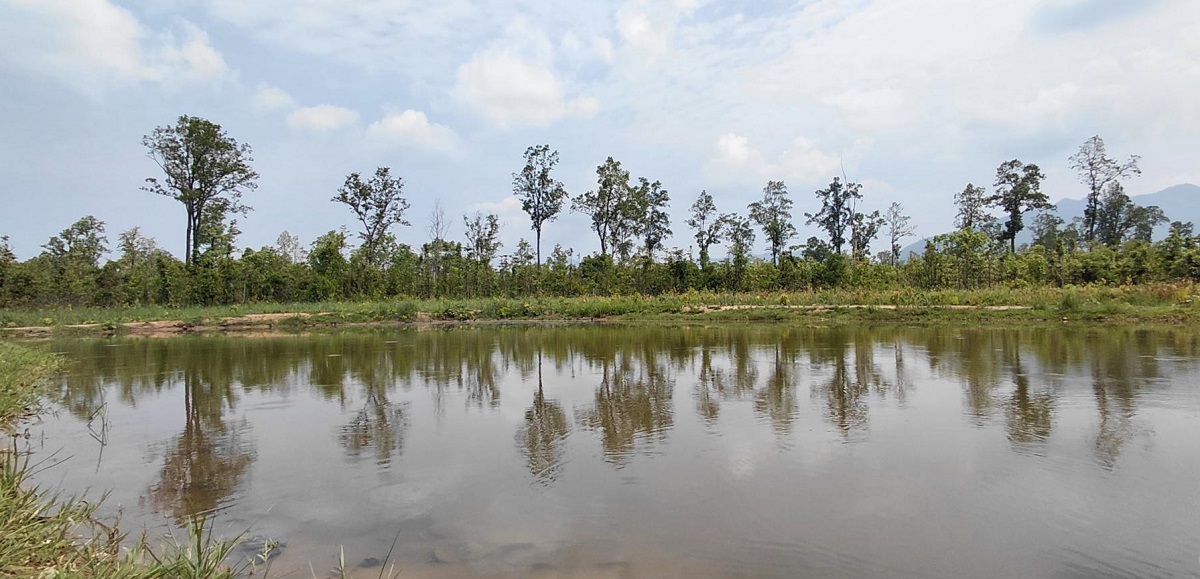
**Artificial ponds bring hope to Nepal’s wildlife**
Banke National Park has built 30 artificial ponds as part of an innovative conservation effort in Nepal. The project marks a significant milestone in reducing human-wildlife conflict, a major issue plaguing the region.
The ponds have provided a reliable water source for animals during the dry season, allowing them to thrive without encroaching on agricultural land or villages. This has resulted in fewer instances of crop damage and livestock attacks, ultimately reducing the stress and financial burden on local communities.
According to Dr. **Subash Ghimire**, the park’s conservation officer, “These artificial ponds have been a boon for our wildlife. They provide a safe and sustainable source of water, which helps maintain a harmonious relationship between humans and animals.” The project has not only protected the animals but also created jobs and empowered local communities to take an active role in conservation.
**What this means**
For locals and wildlife alike, these artificial ponds have been a lifeline. By addressing the root cause of human-wildlife conflict, the park has set a precedent for innovative conservation methods. The reduced tension between humans and animals has also paved the way for coexistence and mutual understanding.
The park’s efforts have inspired neighboring regions to replicate the project, sparking a wider conversation about the role of technology in conservation. As **Dr. Ghimire** notes, “We’re not just building ponds; we’re building a better future for our people and wildlife.”
**A model for future conservation**
Banke National Park’s artificial pond initiative has demonstrated the value of technology and collaboration in addressing human-wildlife conflict. As the region continues to grow and face new challenges, this model offers a promising solution for protecting both humans and animals, promoting a harmonious balance in the ecosystem.
The park’s success story serves as a reminder that conservation doesn’t have to be a zero-sum game; it can be a win-win for all stakeholders involved.