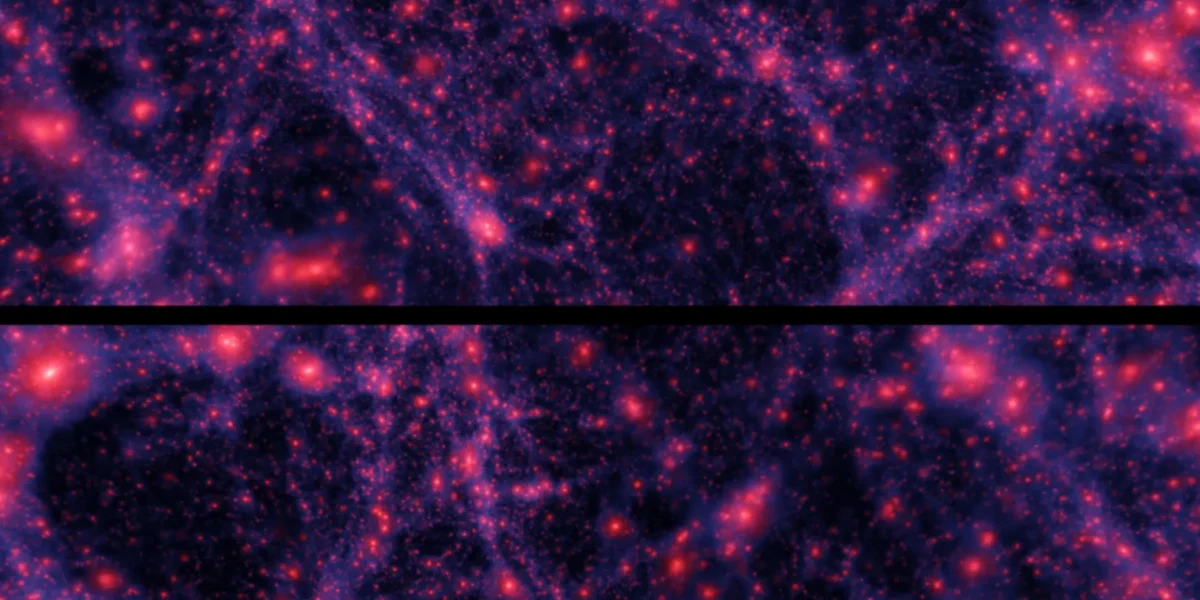
Scientists are using AI to simulate the universe in seconds, but this shortcut may also lead to blind spots.
Transfer learning, a technique borrowed from the field of natural language processing, has revolutionized the way cosmologists study the universe. It allows researchers to train AI models on vast amounts of existing data, saving them from having to run expensive simulations from scratch. The approach has already led to breakthroughs in understanding galaxy evolution and dark matter.
By leveraging these pre-trained models, researchers can make predictions and identify patterns in data much faster than before.
What this means
This means researchers can explore more ideas, test more hypotheses, and make new discoveries in a fraction of the time it would take without AI. For example, scientists can use transfer learning to analyze large datasets from telescopes, identifying patterns that might have gone unnoticed by human researchers.
The catch: familiar patterns can be a snare
However, researchers warn that relying too heavily on familiar patterns can lead to a phenomenon known as “overfitting.” This occurs when AI models become too specialized in recognizing patterns they’ve seen before, rather than discovering new ones.
As AI models rely on pre-trained networks, they may miss out on evidence that challenges their existing understanding of the universe. For instance, a model trained on patterns related to galaxy rotation may struggle to identify a new type of galaxy that doesn’t fit those patterns.
Researchers are now working to develop methods to prevent overfitting and ensure that AI models are more open to discovering new physics.
The future of cosmology
Achieving this balance will be crucial as researchers continue to push the boundaries of what we know about the universe. By combining the power of transfer learning with strategies to prevent overfitting, scientists may uncover new physics previously hidden from view.
While this research is still in its early stages, one thing is clear: AI is rapidly changing the way we study the universe, and the discoveries that await us are likely to be both surprising and profound.